
You have been trying to conceive, or perhaps you are simply checking your fertility for the future. Then your blood test results arrive, and you see two words that immediately worry you: low ovarian reserve.
You may begin asking yourself difficult questions. Does this mean I am running out of eggs? Will I ever get pregnant? Have I waited too long? Should I start fertility treatment immediately?
A low ovarian reserve result can feel frightening, especially if having a baby is something you deeply want. But before assuming the worst, it is important to understand what the result actually means.
A low ovarian reserve does not automatically mean you cannot get pregnant naturally or have a baby. It suggests that the number of eggs remaining in your ovaries may be lower than expected, or that you may produce fewer eggs in response to fertility medication. It does not, by itself, establish whether you can conceive naturally.
Your age, medical history, ovulation, fallopian tubes, sperm health, and other factors also matter when assessing fertility.
What Is Ovarian Reserve?
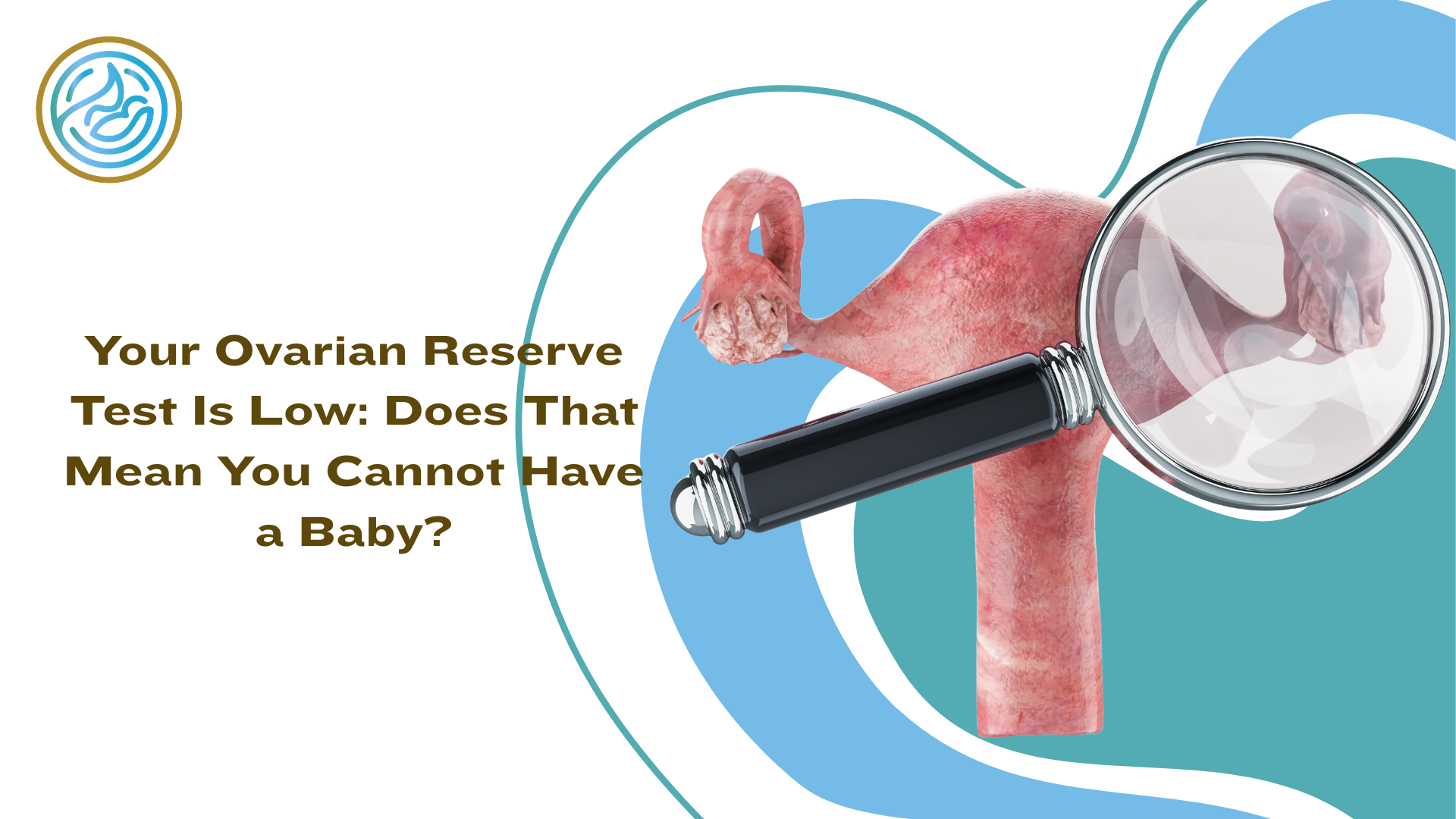
Ovarian reserve refers primarily to the quantity of eggs remaining in a woman’s ovaries.
A woman is born with a finite supply of eggs. Over time, this supply gradually decreases through a natural process called follicular loss. The decline occurs throughout life and generally becomes more significant as women get older.
Each month, a group of small structures called follicles begins developing in the ovaries. Usually, one follicle releases an egg during ovulation, although this does not happen in every cycle.
Ovarian reserve testing helps estimate the remaining pool of eggs indirectly. It cannot count every egg in the ovaries or tell you exactly how many years of fertility you have left.
It is also important to distinguish between egg quantity and egg quality. Ovarian reserve tests mainly provide information about quantity. They do not directly measure whether an individual egg can be fertilised, develop into an embryo, or result in a healthy pregnancy.
Egg quality is strongly associated with age, although individual circumstances vary.
What Does a Low Ovarian Reserve Test Mean?
A low result generally suggests that your ovaries may have a smaller pool of recruitable follicles than expected for your age or that you may respond less strongly to fertility stimulation.
The implications depend on which test was performed, your age, the laboratory’s reference range, and your medical history.
For example, a low result in a woman in her early twenties may have different implications from the same result in a woman approaching forty.
A fertility specialist will interpret the result alongside other information rather than using one number to decide whether pregnancy is possible.
The three main ways ovarian reserve is assessed
1. Anti-Müllerian hormone (AMH)
AMH is a hormone produced by cells in developing ovarian follicles. A blood test measures its concentration.
AMH is widely used because it can generally be measured at different points in the menstrual cycle. Lower AMH levels may indicate a smaller pool of developing follicles, while higher levels may be associated with a larger follicle pool.
However, AMH is not a direct count of your eggs. It cannot reliably predict exactly when menopause will occur or whether you will conceive naturally.
Hormonal contraception and certain medical conditions or treatments can also influence interpretation.
2. Antral follicle count (AFC)
Antral follicle count is measured using a transvaginal ultrasound, which allows a clinician to count small developing follicles visible in the ovaries.
A lower count may suggest a reduced ovarian reserve. The result is interpreted in relation to your age, the ultrasound findings, and other clinical information.
3. Follicle-stimulating hormone (FSH)
FSH is a hormone involved in stimulating follicle development. It is often measured early in the menstrual cycle, together with oestradiol.
An elevated FSH level may suggest reduced ovarian reserve, but levels can fluctuate between cycles. A single result may therefore not provide a complete picture.
These tests are complementary. None can independently determine whether you will or will not have a baby.
Does Low AMH Mean You Cannot Get Pregnant Naturally?
No. This is one of the most important distinctions in fertility care.
AMH is useful for estimating ovarian response during fertility treatment, particularly when a specialist is planning ovarian stimulation for in vitro fertilisation (IVF). However, it is a poor standalone predictor of an individual woman’s chances of natural conception.
A woman with low AMH may still ovulate and conceive naturally. Another woman with an apparently normal result may experience fertility difficulties for reasons unrelated to ovarian reserve.
Natural conception depends on several factors, including:
- Whether an egg is released during ovulation.
- Whether the fallopian tubes allow sperm and egg to meet.
- Sperm count, movement, and function.
- The condition of the uterus and reproductive tract.
- Egg quality and age-related factors.
- The timing and frequency of sexual intercourse.
A low ovarian reserve may mean there is less flexibility in the number of eggs available over time. It should not be interpreted as proof that natural pregnancy is impossible.
If you are trying to conceive, a fertility assessment can help establish whether ovarian reserve is the main concern or whether other factors also need investigation.
Does Your Age Matter More Than Your AMH Result?
Age is a major factor in fertility because both egg quantity and egg quality change over time.
As women age, the remaining egg supply decreases, and the proportion of eggs with chromosomal abnormalities generally increases. This can affect the likelihood of conception and miscarriage.
AMH provides useful information about egg quantity, but it cannot replace an assessment of age-related fertility.
Consider these examples:
| Situation | What it may mean |
|---|---|
| A younger woman with low AMH | She may have a reduced ovarian reserve but could still conceive naturally. Her history and other fertility factors need assessment. |
| A woman in her late thirties with normal AMH | Her ovarian reserve may appear reassuring, but age-related changes in egg quality still matter. |
| A woman with low AMH preparing for IVF | She may produce fewer eggs during stimulation, although the response varies. |
| A woman with low AMH and regular periods | She may still be ovulating, but regular cycles do not establish the full state of her fertility. |
These examples are illustrative rather than predictions of an individual’s fertility.
A normal AMH result does not guarantee pregnancy, just as a low result does not mean pregnancy is impossible.
What Causes Low Ovarian Reserve?
Ovarian reserve naturally declines with age, but some women experience a lower reserve earlier than expected.
Possible contributing factors include:
Age-related changes: The number of remaining eggs decreases naturally over time.
Family history: Some women may experience earlier ovarian ageing or menopause because of inherited factors.
Ovarian surgery: Procedures involving the ovaries, including surgery for certain cysts or endometriomas, may reduce ovarian tissue or affect reserve.
Endometriosis: Endometriosis involving the ovaries and its treatment can sometimes affect ovarian reserve.
Chemotherapy or radiotherapy: Some cancer treatments can damage the ovaries and reduce egg supply.
Genetic or autoimmune conditions: Certain conditions can affect ovarian function and may require further investigation.
In many cases, the exact reason for a low result is not immediately clear.
A low ovarian reserve test alone does not diagnose premature ovarian insufficiency. That condition involves reduced ovarian function and requires a separate clinical assessment.
What Should You Do If Your Ovarian Reserve Is Low?
The next step is not necessarily to start IVF. It is to understand what the result means in the context of your goals.
Step 1: Review the result with a fertility specialist
Ask which test was performed, what the result means for your age, and whether additional investigations are needed.
Do not compare your number directly with someone else’s. Laboratories use different methods and reference ranges, and the same result can have different implications for different women.
Step 2: Assess your overall fertility
Depending on your circumstances, your clinician may recommend evaluating ovulation, the uterus, fallopian tube patency, and other reproductive factors.
If you have a male partner, a semen analysis is often an important part of the assessment. Fertility difficulties can involve either partner or both, and testing both can prevent unnecessary delays.
Step 3: Discuss your reproductive plans
If you want to become pregnant now, your specialist can help determine whether it is appropriate to continue trying naturally, investigate other factors, or consider fertility treatment.
If you are not ready for pregnancy, ask about your future options. Egg freezing may be worth discussing in selected circumstances, but it does not guarantee a future pregnancy. Age at freezing and the number of eggs obtained are important considerations.
Step 4: Avoid unnecessary supplements and unproven treatments
There is no proven supplement that reliably restores a depleted ovarian egg supply.
A healthy lifestyle can support general wellbeing and reproductive health, but it cannot reverse age-related egg loss. Be cautious of products marketed as treatments that can increase egg numbers or guarantee pregnancy.
When Should You Seek Fertility Advice?
General guidance recommends a fertility evaluation:
- After 12 months of regular, unprotected intercourse if you are younger than 35.
- After six months if you are 35 or older.
- More promptly if you are over 40 or have a known condition that may affect fertility.
These timelines are not a reason to delay care if you already have a low ovarian reserve result or a relevant medical history.
Seek earlier advice if you have irregular or absent periods, a history of ovarian surgery, endometriosis, chemotherapy, or a family history of early menopause.
If you have stopped menstruating or have significant cycle changes at a young age, your clinician may investigate premature ovarian insufficiency or other hormonal conditions.
Frequently Asked Questions
1. Can I get pregnant naturally with low AMH?
Yes, natural pregnancy may still be possible. AMH does not reliably predict an individual’s chances of natural conception on its own. Your age, ovulation, fallopian tubes, sperm health, and other factors also matter.
2. Can ovarian reserve improve?
AMH and other ovarian reserve measurements can fluctuate, and results may vary with testing methods or certain medications. However, there is no established treatment that reliably restores the number of eggs lost through natural ageing.
3. Does low ovarian reserve mean early menopause?
Not necessarily. A low result alone cannot reliably predict when menopause will occur. If your periods become irregular or stop, further assessment may be needed.
4. Will IVF work if my ovarian reserve is low?
IVF may still be an option, but a lower reserve can mean fewer eggs are obtained during stimulation. Outcomes depend on several factors, particularly age, egg quality, the response to treatment, and the clinic’s assessment. Your specialist can discuss realistic expectations and alternatives.
5. Should I freeze my eggs if my AMH is low?
It depends on your age, reproductive goals, medical history, and likely response to stimulation. A low reserve may mean fewer eggs can be collected in a cycle. A fertility specialist can explain the potential benefits, limitations, costs, and alternatives.
The Bottom Line
Receiving a low ovarian reserve result can be worrying, but it is not a final verdict on your fertility.
The test provides information about the likely quantity of eggs remaining in your ovaries. It does not directly measure egg quality, guarantee whether you can conceive naturally, or determine exactly when you will reach menopause.
If you are trying to have a baby, the most useful next step is a personalised fertility assessment that considers your age, reproductive history, ovarian reserve, and other factors affecting conception.
A low result is a reason to understand your fertility more clearly, not a reason to assume that motherhood is impossible. Seek reliable medical guidance, ask questions, and make decisions based on your individual circumstances rather than a single test result.