
Introduction
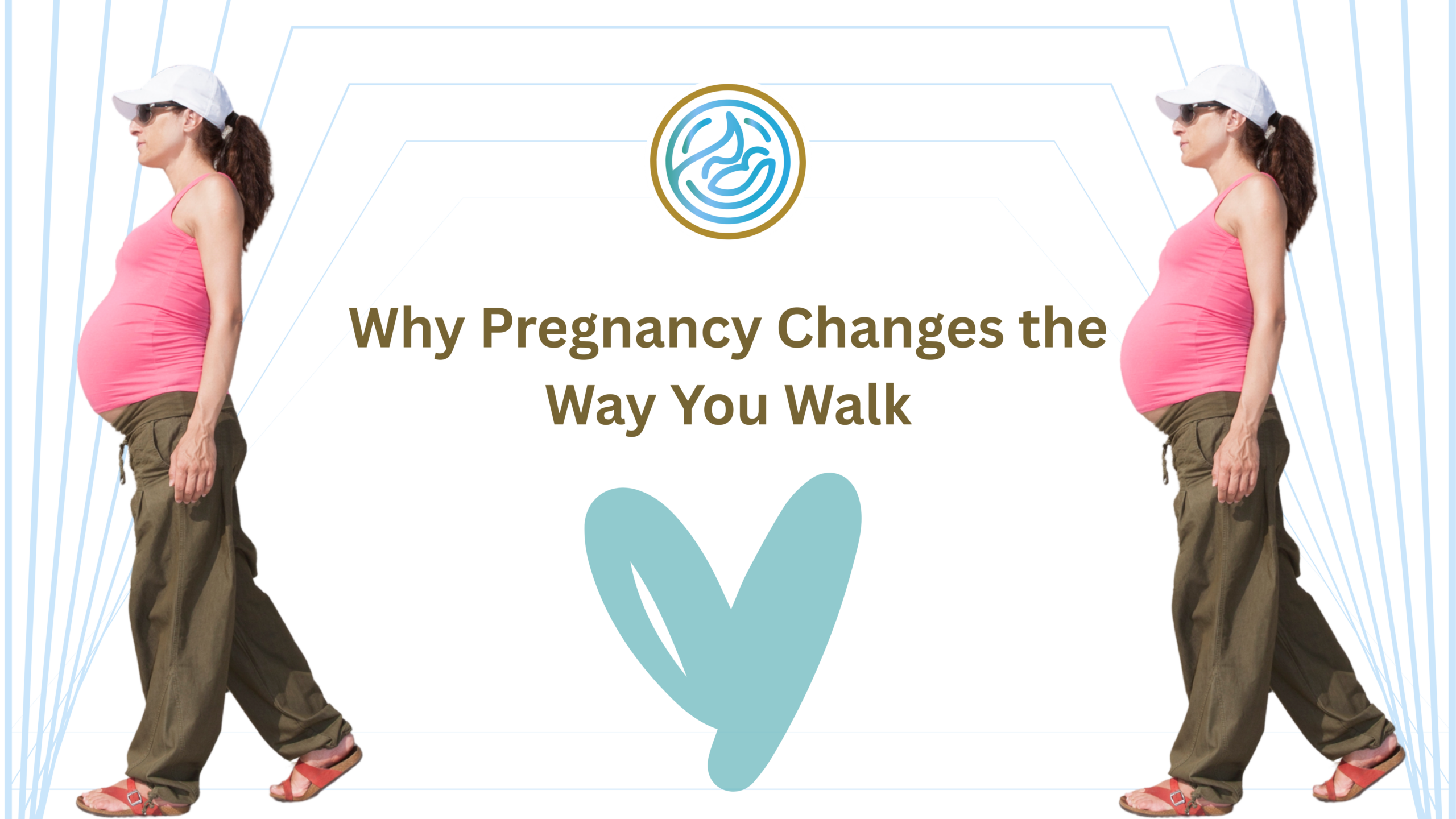
Many women notice that their walking pattern begins to change as pregnancy progresses. Friends, family members, and even strangers may comment on a pregnant woman’s distinctive walk, often referred to as the “pregnancy waddle.” While this change is commonly associated with late pregnancy, alterations in posture, balance, and movement can begin much earlier than many people realize.
Pregnancy places unique demands on the musculoskeletal system. As the baby grows, the body undergoes significant anatomical and hormonal changes that affect balance, joint stability, posture, muscle function, and movement patterns. These adaptations are not random, they are the body’s way of accommodating a growing baby while helping the mother remain mobile and upright.
Understanding why pregnancy changes the way women walk can provide reassurance about what is normal, help identify symptoms that require medical attention, and offer practical strategies for maintaining comfort throughout pregnancy.
Walking Is More Complex Than It Appears
Walking involves a highly coordinated interaction between:
- Muscles
- Bones
- Joints
- Ligaments
- The nervous system
- Balance mechanisms
Every step requires the body to:
- Maintain stability
- Shift weight
- Coordinate movement
- Adjust posture
During pregnancy, these systems must adapt to dramatic physical changes occurring over a relatively short period.
The Growing Baby Changes Your Centre of Gravity
One of the biggest reasons walking changes during pregnancy is the shifting centre of gravity.
As the uterus enlarges:
- Weight moves forward
- The abdomen protrudes
- Balance becomes more challenging
To prevent falling, the body automatically adjusts posture and movement patterns.
Women often compensate by:
- Leaning backward slightly
- Taking shorter steps
- Widening their stance
- Walking more slowly
These changes help maintain stability.
Understanding the Centre of Gravity
The centre of gravity refers to the point where body weight is evenly balanced.
Before pregnancy:
- Weight is distributed more centrally
During pregnancy:
- Weight shifts forward and upward
The body responds by altering alignment and gait.
This adaptation is one of the primary reasons many women develop the characteristic pregnancy walk.
Hormones Play a Major Role
Pregnancy hormones affect much more than reproductive organs.
One important hormone is:
Relaxin
Relaxin helps prepare the body for childbirth by loosening ligaments and increasing joint flexibility.
Its effects include:
- Increased pelvic mobility
- Reduced joint stability
- Greater ligament laxity
While these changes are necessary for labour and delivery, they can also affect walking and balance.
How Relaxin Affects Movement
When ligaments become more flexible:
- Joints move differently
- Stability decreases
- Muscles must work harder to compensate
Affected areas include:
- Pelvis
- Hips
- Knees
- Lower back
As a result, women may feel:
- Less steady
- More fatigued
- More prone to waddling
The Pelvis Begins to Adapt
The pelvis undergoes important changes during pregnancy.
Its role is to:
- Support the growing uterus
- Bear additional weight
- Prepare for childbirth
As pregnancy progresses:
- Pelvic joints become more mobile
- The pelvic outlet gradually adapts
- Walking mechanics shift
These adjustments contribute significantly to changes in gait.
Why the Pregnancy Waddle Develops
The pregnancy waddle is not simply a stereotype—it is a biomechanical adaptation.
Several factors contribute:
Wider Base of Support
Women often place their feet farther apart to improve stability.
Reduced Pelvic Stability
Looser ligaments alter hip and pelvic movement.
Increased Body Weight
Additional weight affects movement efficiency.
Balance Adjustments
Shorter steps reduce the risk of falls.
Together, these changes create the characteristic side-to-side movement commonly observed in late pregnancy.
Common Walking Changes During Pregnancy
Symptom Checklist
✓ Walking more slowly
✓ Taking shorter steps
✓ Wider stance
✓ Mild waddling
✓ Feeling less balanced
✓ Increased lower back strain
✓ Hip discomfort
✓ Pelvic pressure
✓ Increased fatigue when walking
✓ Difficulty standing for long periods
Postural Changes During Pregnancy
Pregnancy often changes posture dramatically.
Many women develop:
Increased Lumbar Lordosis
This refers to an exaggerated inward curve of the lower back.
It occurs because the body attempts to counterbalance the growing abdomen.
Postural changes may include:
- Rounded shoulders
- Forward head posture
- Arching of the lower back
- Shifted weight distribution
These changes influence how a woman walks.
Trimester-by-Trimester Walking Changes
| Trimester | Common Changes |
|---|---|
| First Trimester | Minimal visible changes, mild fatigue |
| Second Trimester | Posture adjustments become noticeable |
| Third Trimester | Waddling, wider stance, slower walking speed |
Not every woman experiences all of these changes.
Why Hip Pain Can Affect Walking
The hips absorb much of the increased load during pregnancy.
Contributing factors include:
- Weight gain
- Ligament relaxation
- Altered posture
- Muscle fatigue
Women may notice:
- Hip aching
- Stiffness
- Discomfort when climbing stairs
- Difficulty walking long distances
These symptoms can alter gait patterns further.
Pelvic Girdle Pain and Walking Difficulties
Some women develop:
Pelvic Girdle Pain (PGP)
This condition affects the joints and ligaments of the pelvis.
Symptoms may include:
- Pain when walking
- Pain turning in bed
- Discomfort climbing stairs
- Difficulty standing on one leg
Pelvic girdle pain can significantly affect mobility and should be discussed with a healthcare provider.
Why Lower Back Pain Changes Walking
Lower back pain is one of the most common pregnancy complaints.
Factors contributing include:
- Increased abdominal weight
- Postural changes
- Muscle strain
- Joint laxity
To reduce discomfort, women may unconsciously modify how they walk.
These adaptations can contribute to:
- Slower movement
- Altered stride length
- Reduced physical activity
Normal Walking Changes vs Concerning Symptoms
| Normal Pregnancy Changes | Symptoms Requiring Medical Evaluation |
|---|---|
| Mild waddling | Sudden inability to walk |
| Occasional hip discomfort | Severe pelvic pain |
| Slower walking pace | Leg weakness |
| Increased fatigue | Significant swelling in one leg |
| Mild balance changes | Persistent numbness |
Why Balance Becomes More Challenging
Balance depends on:
- Vision
- Inner ear function
- Muscle coordination
- Joint positioning
Pregnancy alters several of these systems simultaneously.
As the centre of gravity shifts:
- Stability decreases
- Balance corrections become more frequent
- The risk of falls increases
This explains why many pregnant women become more cautious while walking.
The Impact of Weight Gain
Healthy pregnancy weight gain supports:
- Fetal growth
- Placental development
- Blood volume expansion
- Breast development
However, additional weight increases the workload placed on:
- Hips
- Knees
- Feet
- Lower back
This can make walking feel more tiring than usual.
Why Feet Sometimes Change During Pregnancy
Pregnancy may affect the feet in several ways.
Some women experience:
- Foot swelling
- Flattening of the arches
- Increased shoe size
- Foot pain
Changes in foot mechanics can further influence walking patterns.
Can Exercise Help?
Yes.
Appropriate physical activity may help:
- Maintain muscle strength
- Improve balance
- Support posture
- Reduce discomfort
Examples include:
- Walking
- Prenatal yoga
- Swimming
- Pregnancy-safe strength training
Exercise should always be discussed with a healthcare provider.
Tips for More Comfortable Walking During Pregnancy
Wear Supportive Footwear
Proper shoes help improve stability.
Maintain Good Posture
Avoid excessive leaning backward.
Stay Active
Gentle movement supports muscle function.
Take Frequent Breaks
Rest helps prevent fatigue.
Use Support Garments if Recommended
Maternity support belts may provide relief for some women.
When Walking Becomes Painful
Although mild discomfort is common, severe pain is not considered normal.
Medical assessment is recommended if walking is affected by:
- Severe pelvic pain
- Intense hip pain
- Persistent back pain
- Leg weakness
- Sudden swelling
- Neurological symptoms
Early intervention may improve comfort and mobility.
Why Walking Changes Help Prepare for Birth
Many pregnancy-related movement changes are actually protective adaptations.
They help:
- Improve stability
- Reduce fall risk
- Accommodate a growing baby
- Prepare the pelvis for childbirth
Although they may feel awkward at times, these adjustments reflect the body’s remarkable ability to adapt during pregnancy.
Symptom Checklist: Contact Your Healthcare Provider If You Experience
✓ Severe pelvic pain
✓ Sudden inability to bear weight
✓ Persistent numbness
✓ Significant weakness
✓ One-sided leg swelling
✓ Frequent falls
✓ Severe back pain
✓ Symptoms that worsen rapidly
✓ Difficulty performing normal daily activities
Conclusion
Pregnancy changes the way women walk because the body must adapt to a growing baby, shifting weight distribution, hormonal influences, and changes in joint stability. The forward movement of the centre of gravity, the effects of relaxin on ligaments, pelvic adaptations, postural changes, and increased physical demands all contribute to alterations in gait.
For most women, these changes are completely normal and represent healthy physiological adaptations designed to maintain balance and prepare the body for childbirth. However, severe pain, mobility difficulties, or neurological symptoms should always be evaluated by a healthcare professional.
By understanding the science behind pregnancy-related walking changes, women can better appreciate the remarkable adjustments their bodies make throughout pregnancy and take proactive steps to maintain comfort, mobility, and overall wellbeing during this transformative journey.