
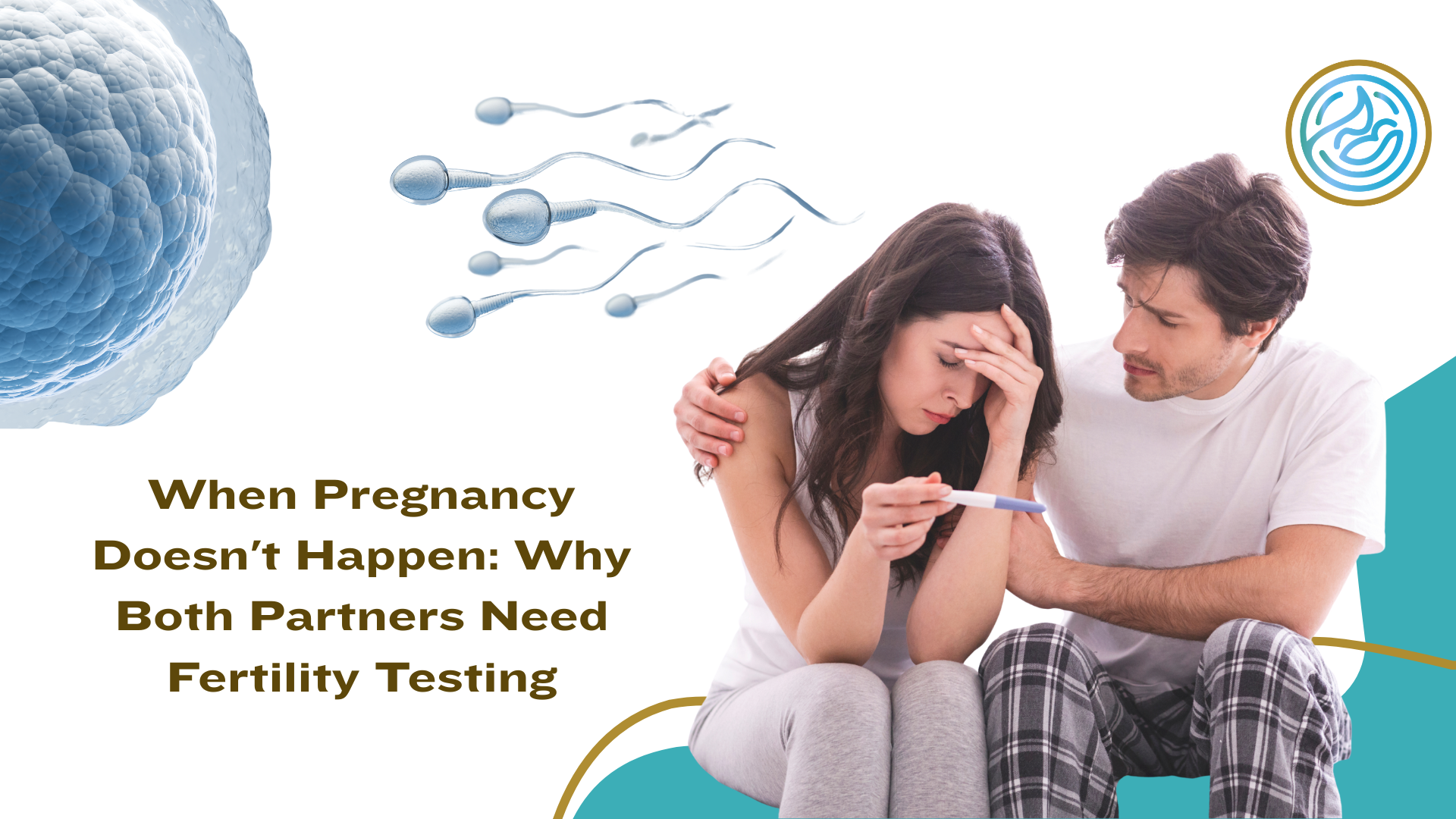
Trying to conceive can be an emotional journey, especially when month after month passes without a positive pregnancy test. You may begin tracking your menstrual cycle more closely, changing your diet, taking supplements or wondering whether something is wrong with your body.
For many women, the first instinct is to visit a gynaecologist and investigate their own fertility. However, difficulty conceiving is not automatically a woman’s problem. Fertility involves both partners, and both should be assessed when appropriate.
Male factors, female factors, a combination of both and unexplained infertility can all contribute to difficulty becoming pregnant. Testing both partners early can help identify possible causes, prevent unnecessary delays and guide treatment towards the couple’s specific needs.
Understanding when to seek help, which tests may be recommended and why both partners matter can make the fertility journey less confusing.
What Is Infertility?
Infertility is generally defined as not achieving a pregnancy after 12 months of regular, unprotected sexual intercourse. However, the recommended time to seek assessment depends on the woman’s age, medical history and any known fertility concerns.
A fertility assessment is generally recommended:
- Under 35 years: After 12 months of trying to conceive.
- Age 35–39: After six months of trying.
- Age 40 or older: Consider seeking advice promptly rather than waiting.
- At any age: Earlier assessment may be appropriate if either partner has a known fertility concern or symptoms suggesting a reproductive problem.
These timeframes are general guidelines, not instructions to delay care when there is a known concern.
For example, a woman with irregular or absent periods, a history of pelvic inflammatory disease, suspected endometriosis or previous treatment that may affect fertility may benefit from earlier assessment. A man with a history of testicular injury, undescended testes, chemotherapy or sexual or ejaculatory difficulties may also need earlier evaluation.
Importantly, infertility does not necessarily mean that pregnancy is impossible. It means that conception has not occurred within the expected timeframe and that further assessment may be helpful.
Why Fertility Is a Shared Responsibility
Pregnancy requires several biological processes to work together. The ovaries must release an egg, sperm must reach and fertilise it, the fertilised egg must travel through the fallopian tube, and the embryo must implant in the uterus.
Problems at different stages can affect the chances of conception.
Male factors contribute to infertility in a substantial proportion of couples, either alone or alongside female factors. Female factors, combined factors and cases where no clear cause is identified also occur.
This is why investigating only one partner may leave important questions unanswered.
Common causes of female infertility
Female fertility can be affected by several conditions, including:
- Ovulation disorders: Conditions such as polycystic ovary syndrome (PCOS) may interfere with regular egg release.
- Endometriosis: Tissue similar to the lining of the uterus grows outside it and may affect the ovaries, fallopian tubes or pelvic environment.
- Blocked or damaged fallopian tubes: Previous pelvic infections, surgery or other conditions may interfere with the egg and sperm meeting.
- Uterine conditions: Fibroids, polyps or certain structural differences may affect fertility, depending on their location and severity.
- Age-related changes: Egg quantity and quality decline with age, particularly as a woman approaches her late 30s and 40s.
- Premature ovarian insufficiency: The ovaries may stop functioning normally before age 40, although occasional ovulation can still occur.
- Unexplained infertility: Standard tests may not reveal a clear reason why pregnancy has not occurred.
Having one of these conditions does not automatically mean a woman cannot conceive. The effect varies from person to person.
Common causes of male infertility
Male fertility depends on sperm production, sperm movement, sperm structure and the ability to deliver sperm during intercourse.
Possible causes include:
- Low sperm concentration or no sperm in the semen.
- Poor sperm movement, known as reduced motility.
- A high proportion of sperm with abnormal shape, which may affect fertility in some circumstances.
- Varicocele, or enlarged veins in the scrotum, which may affect sperm production in some men.
- Hormonal conditions affecting sperm production.
- Previous testicular injury, infection or surgery.
- Blockages affecting sperm transport.
- Certain medications, cancer treatments or anabolic steroid use.
- Erectile or ejaculatory difficulties that prevent sperm from being deposited in the vagina.
Smoking, heavy alcohol consumption, some recreational drugs, excess heat exposure and certain occupational or environmental exposures may also influence reproductive health.
However, lifestyle factors are only part of the picture. A man who is healthy, physically active and has no obvious symptoms can still have a sperm-related fertility problem.
Why Both Partners Should Be Tested at the Same Time
When only the woman undergoes testing, the process may become longer, more expensive and emotionally exhausting. She may undergo blood tests, scans and procedures before anyone investigates whether sperm factors are contributing.
A more coordinated approach allows the healthcare professional to assess both partners early and plan the next steps based on the findings.
| If only one partner is assessed | If both partners are assessed |
|---|---|
| Important contributing factors may be missed. | Potential causes in either partner can be identified. |
| Testing may need to be repeated or delayed. | Investigations can often proceed in parallel. |
| One partner may feel unfairly blamed. | Fertility is approached as a shared health concern. |
| Treatment may be planned with incomplete information. | Treatment options can be discussed using a fuller picture. |
| Emotional stress may increase through uncertainty. | Both partners can participate in decisions and support each other. |
Testing both partners does not mean that both necessarily have a fertility problem. It means that the assessment is more complete.
What Fertility Tests May Be Recommended for Women?
The tests recommended depend on menstrual history, age, previous pregnancies, medical conditions, examination findings and how long the couple has been trying.
1. Medical and menstrual history
A healthcare professional may ask about:
- Whether periods are regular and how long cycles usually last.
- Previous pregnancies, miscarriages or ectopic pregnancies.
- Pelvic pain, painful periods or pain during sex.
- Previous sexually transmitted infections or pelvic infections.
- Past abdominal or pelvic surgery.
- Medications, chronic conditions and relevant family history.
These details can help determine which investigations are most useful.
2. Blood tests
Blood tests may be used to investigate ovulation or possible hormonal conditions.
Depending on the circumstances, tests may include thyroid function, prolactin when indicated, or progesterone timed appropriately in the menstrual cycle to help assess whether ovulation has occurred.
Anti-Müllerian hormone (AMH) and other ovarian reserve assessments may sometimes be recommended. These tests can help estimate aspects of ovarian reserve and guide treatment planning, particularly when fertility treatment is being considered.
An important distinction: AMH is not a direct test of whether a woman can become pregnant naturally. A low result does not automatically mean pregnancy is impossible, and a normal result does not guarantee fertility.
3. Pelvic ultrasound
An ultrasound may help assess the uterus and ovaries, identify some fibroids or ovarian cysts, and look for signs of certain conditions.
However, a standard pelvic ultrasound cannot reliably confirm that the fallopian tubes are open, and a normal scan does not rule out every cause of infertility.
4. Fallopian tube assessment
A test such as a hysterosalpingogram (HSG) or another appropriate tubal patency investigation may be recommended to assess whether the fallopian tubes appear open.
This is important because fertilisation usually occurs in a fallopian tube. If both tubes are blocked, natural conception may be significantly affected.
The choice and timing of testing depend on the woman’s circumstances and the possibility of an existing pregnancy or infection.
5. Further investigations when indicated
Depending on the initial findings, a specialist may recommend additional investigations for suspected endometriosis, uterine abnormalities or other reproductive conditions. Not every woman needs every test, and more invasive procedures are not automatically the best first step.
What Fertility Tests May Be Recommended for Men?
Male fertility assessment often begins with a medical history and a semen analysis.
1. Semen analysis
A semen analysis examines a semen sample in a laboratory. It commonly evaluates:
- Sperm concentration: How many sperm are present in a given volume.
- Total sperm number: The overall number of sperm in the sample.
- Motility: How sperm move.
- Morphology: The proportion of sperm with typical shape.
- Semen volume and other characteristics: Additional features that may help interpret the results.
A semen analysis is an important first-line investigation because male fertility problems may not cause noticeable symptoms.
An abnormal result does not automatically mean a man cannot father a child. Semen measurements can vary between samples, and the findings must be interpreted in context. A repeat test may be recommended, particularly when the first result is abnormal.
The laboratory will provide instructions about abstaining from ejaculation before the test and how to collect and deliver the sample correctly. Following these instructions helps improve the usefulness of the result.
2. Medical examination and history
The healthcare professional may ask about previous fertility, testicular conditions, operations, infections, medication use, sexual function and lifestyle factors.
A physical examination may be recommended to assess the testes and other relevant structures.
3. Hormonal or specialised testing
Hormone tests, genetic investigations or imaging may be appropriate for selected men, particularly when sperm counts are very low or absent, or when symptoms or examination findings suggest an underlying condition.
These additional investigations are not necessary for every man.
Normal Findings Versus Results That Need Further Assessment
Fertility test results should never be interpreted in isolation. A single result rarely provides the complete answer.
| Finding | What it may mean | What usually happens next |
|---|---|---|
| Regular menstrual cycles | Ovulation is more likely, but not guaranteed. | Further assessment may still be needed. |
| Normal pelvic ultrasound | No obvious abnormality was seen on that scan. | Tubal, hormonal or other causes may still require investigation. |
| Low AMH | Ovarian reserve may be lower than expected. | Interpret alongside age, history and other findings. |
| Abnormal semen analysis | A sperm-related factor may be contributing. | Repeat testing or specialist review may be recommended. |
| Blocked fallopian tube on testing | Egg and sperm may have difficulty meeting. | Confirm findings and discuss appropriate treatment. |
| Normal initial tests in both partners | No cause has been identified by those tests. | Further review or an unexplained infertility diagnosis may be considered. |
A result outside the laboratory’s reference range does not always translate directly into the likelihood of pregnancy. Equally, normal results cannot guarantee conception.
What If All the Tests Are Normal?
Some couples are told that their initial investigations are normal even though pregnancy has not occurred. This may be described as unexplained infertility when the standard evaluation has not identified a clear cause.
The term does not mean that the couple’s experience is imaginary or that nothing is wrong. It means that available tests have not established a definite explanation.
Depending on age, duration of trying, medical history and personal preferences, a healthcare professional may recommend continued attempts for a period, fertility treatment such as intrauterine insemination in selected cases, or in vitro fertilisation (IVF).
The most suitable approach is individualised. Not every couple needs IVF, and not every couple will benefit from the same treatment.
When Should You Seek Fertility Help?
Use this checklist as a guide for arranging an appointment.
Consider booking a fertility assessment if:
-
You have been trying to conceive for 12 months if you are under 35.
-
You are aged 35–39 and have been trying for six months.
-
You are 40 or older and want to become pregnant.
-
Your periods are absent, very irregular or unusually infrequent.
-
You have severe period pain, persistent pelvic pain or pain during sex.
-
You have a history of pelvic inflammatory disease, ectopic pregnancy or reproductive surgery.
-
Your partner has a history of testicular problems, chemotherapy or difficulty with erections or ejaculation.
-
Either partner has previously received an abnormal fertility test result.
You do not need to experience every symptom on this list to benefit from an assessment.
Seek prompt medical advice for severe pelvic pain, particularly if accompanied by fever, fainting or heavy bleeding. If pregnancy is possible and you have significant pain or bleeding, urgent assessment is important because an ectopic pregnancy must be considered.
Can Lifestyle Changes Improve Fertility?
Healthy habits can support reproductive health, although they cannot correct every underlying fertility problem.
Both partners can consider:
- Avoiding smoking and recreational drugs.
- Limiting or avoiding alcohol while trying to conceive.
- Eating a balanced diet and maintaining regular physical activity.
- Reviewing medications and supplements with a healthcare professional.
- Managing existing medical conditions.
- Seeking advice about workplace or environmental exposures where relevant.
Women planning pregnancy are generally advised to take folic acid before conception and during early pregnancy, according to local clinical guidance. Folic acid helps reduce the risk of neural tube defects; it is not a treatment for infertility.
Men should tell their healthcare professional if they use testosterone therapy or anabolic steroids. These can suppress sperm production, sometimes substantially. Prescribed treatment should not be stopped or changed without medical advice.
Lifestyle changes are supportive, not a substitute for investigating persistent difficulty conceiving.
The Emotional Side of Fertility Testing
Difficulty conceiving can affect confidence, intimacy, communication and mental wellbeing. One partner may feel guilty, while the other may feel frustrated or helpless. Family questions and pressure can make the experience more difficult.
It is important to avoid treating fertility results as a measure of someone’s worth or masculinity. A diagnosis is medical information, not a personal failure.
Couples may find it helpful to attend appointments together, discuss how much information they wish to share with relatives and seek counselling or emotional support if the process becomes overwhelming.
If one partner is reluctant to undergo testing, explain that the aim is not to assign blame. It is to understand the factors affecting conception and identify the most appropriate options for both people.
Frequently Asked Questions
Can a man have infertility without knowing it?
Yes. Some male fertility problems do not cause obvious symptoms. A semen analysis can identify abnormalities that cannot be determined by appearance, sexual desire or general fitness alone.
Does having regular periods mean a woman is fertile?
Not necessarily. Regular periods make ovulation more likely, but they do not confirm that the fallopian tubes are open, that sperm parameters are adequate or that every stage of conception is functioning normally.
Does an abnormal semen analysis mean natural pregnancy is impossible?
No. The meaning depends on the type and degree of abnormality and the wider clinical picture. Some men with abnormal results can conceive naturally, while others may need treatment.
Should a man be tested even if the woman has a known fertility condition?
Often, yes. A known female factor does not rule out a contributing male factor. Assessing both partners can help guide treatment decisions.
Does fertility testing mean we will need IVF?
No. Testing is intended to identify possible causes and inform decisions. Depending on the findings, options may include timed intercourse, treatment of an underlying condition, surgery in selected cases, insemination or IVF.
The Bottom Line
When pregnancy does not happen, it is easy to focus on the woman’s body and assume that she is the one who needs answers. But fertility is a shared reproductive process, and both partners deserve a fair, thorough assessment.
Starting the evaluation together can help identify possible causes sooner, avoid unnecessary investigations and make treatment decisions more informed. If you have been trying to conceive without success, speak to a gynaecologist or fertility specialist about the appropriate next steps for both partners.
You do not have to wait until you are emotionally exhausted to ask for help. Seeking answers is a practical step towards understanding your options.