
Introduction
Pregnancy is a period of incredible transformation, both physically and emotionally. In recent years, wearable technology has emerged as a valuable tool for expectant mothers. From smartwatches to belly bands equipped with sensors, wearables provide real-time health data that can improve both maternal and fetal well-being.
This blog explores the different types of wearable devices available for pregnant women, how they work, their benefits, and limitations.
Why Wearables Matter in Pregnancy
Pregnancy requires careful monitoring of both mother and baby. Traditional methods, like routine prenatal check-ups, are essential but often spaced weeks apart. Wearables help fill that gap by providing continuous monitoring of key health indicators.
Benefits include:
- Early detection of complications.
- Peace of mind for expectant mothers.
- More personalized prenatal care.
- Increased patient engagement in health.
Types of Wearable Devices for Pregnant Moms
1. Smartwatches and Fitness Trackers
- Track heart rate, sleep quality, steps, and activity levels.
- Some models monitor blood oxygen (SpO₂) and stress levels.
- Can alert women if their heart rate or sleep patterns indicate stress or fatigue.
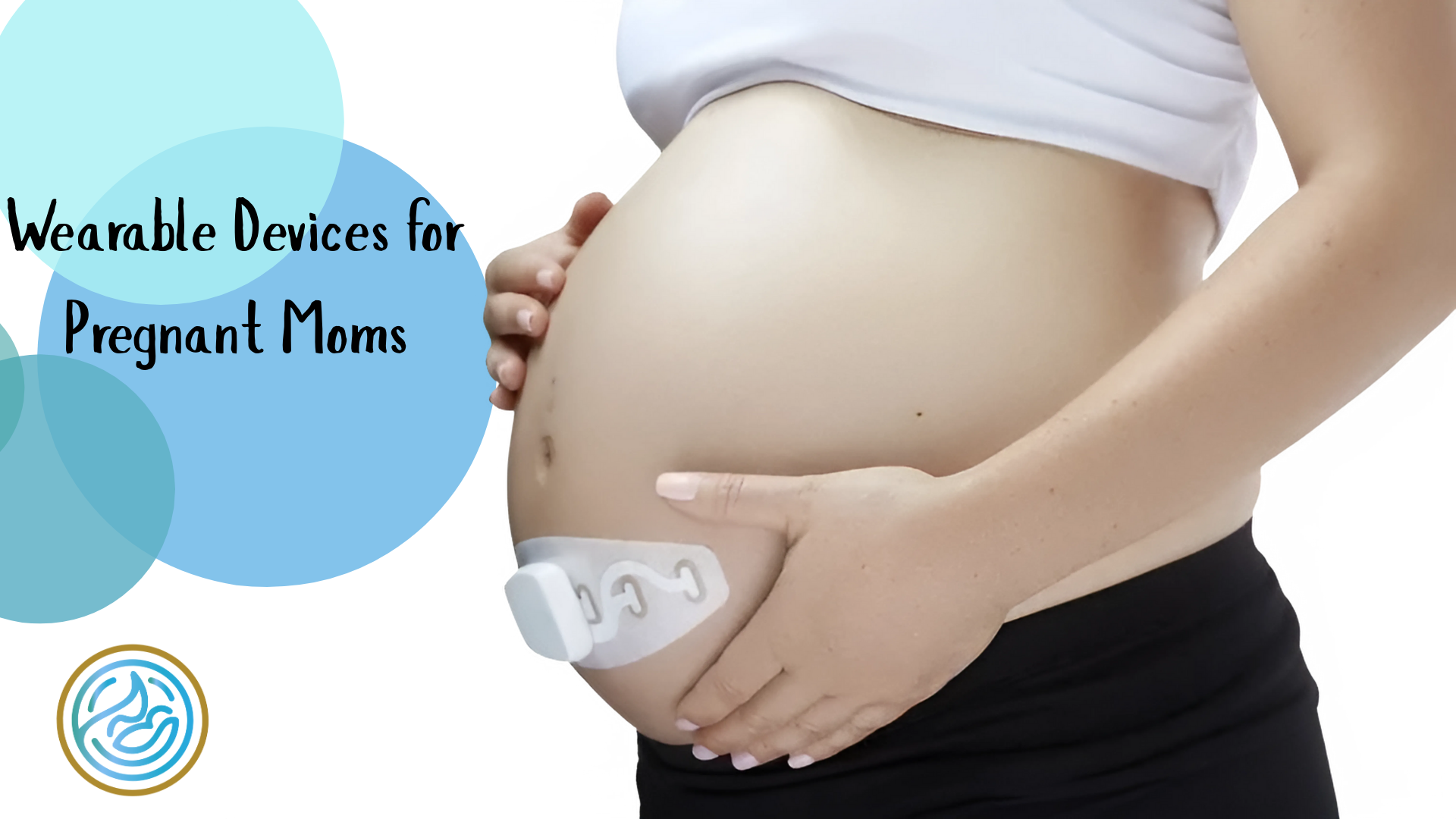
2. Smart Pregnancy Bands
- Worn around the belly.
- Monitor fetal movements and uterine contractions.
- Provide insights into patterns of baby kicks, which are vital for assessing fetal health.
3. Continuous Glucose Monitors (CGM)
- Useful for women with gestational diabetes.
- Track glucose levels 24/7 using a tiny sensor under the skin.
- Reduce the need for frequent finger-prick tests.
4. Smart Blood Pressure Monitors
- Some wearable cuffs or wristbands monitor blood pressure continuously.
- Vital for early detection of preeclampsia (pregnancy-related hypertension).
5. Wearable ECG/EKG Monitors
- Small patches that monitor maternal heart activity.
- Some models also track fetal heart rate.
- Provide real-time data that can be shared with doctors via apps.
Comparison of Common Wearable Devices
| Device Type | Monitors | Best For | Limitations |
|---|---|---|---|
| Smartwatch/Fitness band | Heart rate, sleep, activity | General pregnancy health | Limited fetal monitoring |
| Pregnancy belly band | Fetal kicks, contractions | Monitoring baby’s activity | May not detect all movements |
| Continuous glucose monitor | Blood sugar levels | Women with gestational diabetes | Invasive sensor insertion |
| BP monitor wristband | Blood pressure | Preeclampsia prevention | Accuracy varies |
| ECG/EKG patches | Heart rhythms, fetal heart | High-risk pregnancies | Expensive, hospital availability |
Benefits of Wearable Tech in Pregnancy
- Continuous Monitoring
Wearables track vital signs throughout the day, filling gaps between doctor visits. - Early Detection of Problems
Abnormal readings (e.g., high blood pressure or low fetal movement) can trigger early medical intervention. - Empowerment and Awareness
Expectant mothers can actively track and understand their health, leading to healthier choices. - Improved Communication with Healthcare Providers
Data collected by devices can be shared with doctors during check-ups for more personalized care. - Reduced Anxiety
For high-risk pregnancies, constant monitoring provides reassurance.
Limitations and Concerns
While wearable devices bring enormous benefits, they are not perfect.
| Concern | Explanation |
|---|---|
| Accuracy issues | Not all devices are clinically validated. Some data may be misleading. |
| Over-reliance on devices | Mothers may replace medical visits with wearable data, which is risky. |
| Privacy concerns | Health data stored in apps may not always be secure. |
| Cost | Advanced wearables can be expensive, limiting accessibility. |
Examples of Innovative Pregnancy Wearables
- Owlet Band – A pregnancy band that tracks fetal heart rate and kicks.
- Bloomlife Smart Pregnancy Tracker – Worn on the belly to monitor contractions.
- Apple Watch Series with ECG – Can help monitor maternal heart health.
- Abbott FreeStyle Libre – Continuous glucose monitor widely used in gestational diabetes.
The Role of AI and Apps
Most wearables are paired with mobile apps that:
- Interpret raw data into understandable health insights.
- Send alerts if readings fall outside the normal range.
- Allow mothers to share reports directly with healthcare providers.
Future AI-driven platforms may even predict complications before they occur, such as preeclampsia or preterm labour.
Safety of Wearables in Pregnancy
A common concern is whether constant use of wearable devices is safe for the baby. Research so far shows:
- Most wearables use low-frequency sensors that are safe and non-invasive.
- They should be seen as supplementary tools, not replacements for professional care.
- Women should always confirm device use with their healthcare provider, especially in high-risk pregnancies.
Future of Pregnancy Wearables
Innovations in this field are moving toward:
- Non-invasive fetal monitoring that rivals hospital-grade equipment.
- AI-driven predictions for risks like gestational diabetes or preterm labour.
- Integration with telemedicine, allowing doctors to monitor pregnancies remotely.
- Smart textiles – clothing embedded with sensors to monitor maternal and fetal health seamlessly.
Practical Tips for Choosing a Pregnancy Wearable
- Check Clinical Validation – Choose devices tested for accuracy in pregnancy.
- Prioritize Comfort – Since pregnancy involves body changes, comfort is key.
- Look for Doctor Integration – Devices that allow data-sharing with healthcare providers add value.
- Start Simple – Even a smartwatch tracking sleep and activity can be useful.
- Don’t Skip Check-ups – Use wearables as supportive tools, not replacements for medical visits.
Key Takeaways
- Wearable devices are transforming pregnancy monitoring by providing real-time insights into maternal and fetal health.
- Devices range from smartwatches and belly bands to continuous glucose monitors and ECG patches.
- Benefits include early detection of risks, empowerment, and peace of mind.
- Limitations include accuracy issues, data privacy, and costs.
- The future promises even more advanced, AI-driven, and non-invasive tools.
Final Word
Wearable technology is empowering expectant mothers like never before. By combining traditional prenatal care with modern wearable devices, women can gain greater control over their health and their baby’s well-being. While these tools are not replacements for professional medical care, they are valuable companions on the journey to motherhood.