
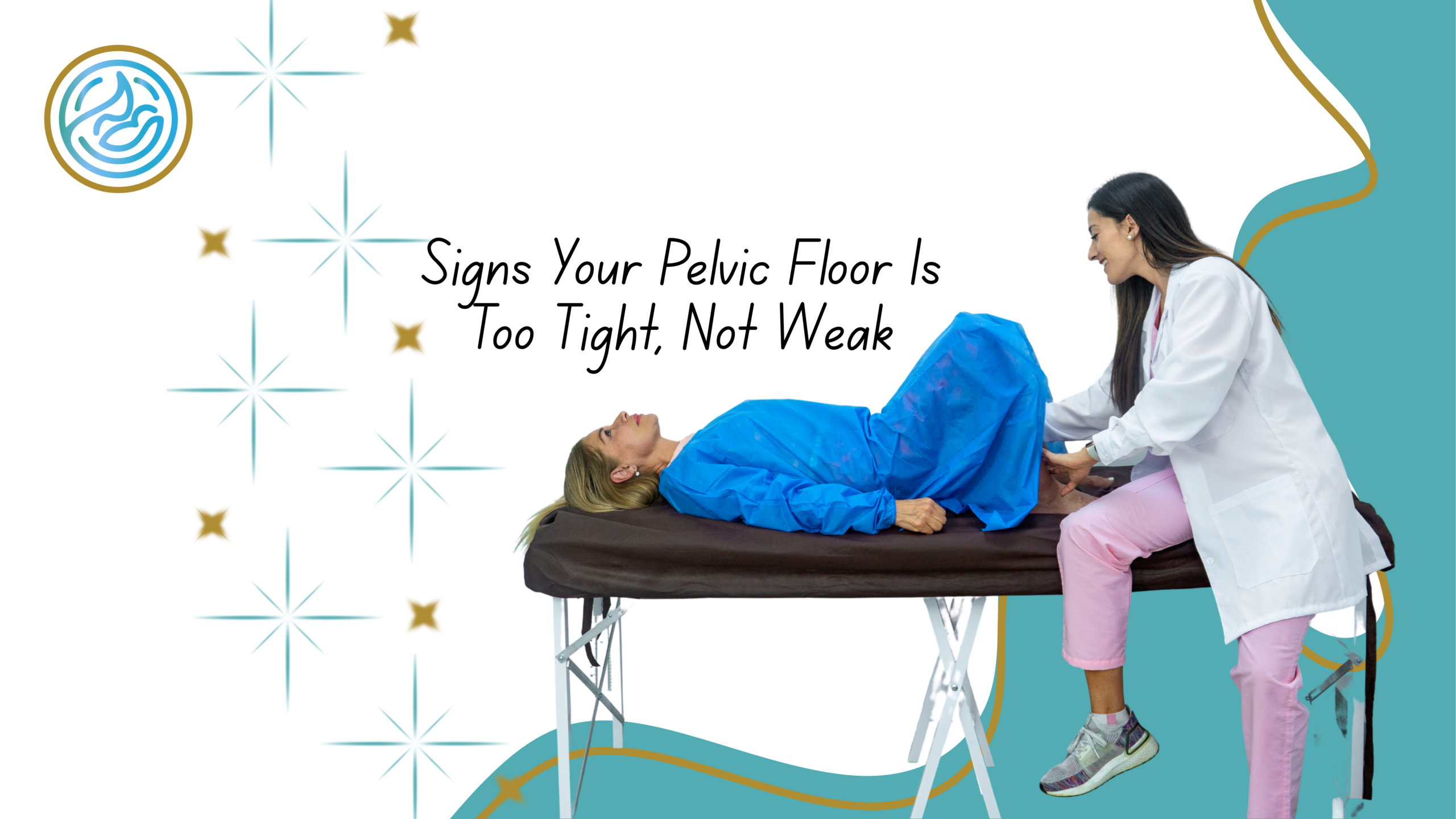
When women hear the term pelvic floor problems, they often assume the issue is weakness. However, the pelvic floor can also be too tight (hypertonic) and this is frequently overlooked.
A tight pelvic floor does not mean strength. In fact, excessive tension can cause pain, dysfunction, and a range of urinary, bowel, and sexual symptoms that are often misdiagnosed or misunderstood.
Understanding the difference between a weak pelvic floor and a tight pelvic floor is essential for proper treatment and recovery.
What Is the Pelvic Floor?
The pelvic floor is a group of muscles that:
- Support the bladder, uterus, and bowel
- Control urination and bowel movements
- Play a role in sexual function
- Stabilise the core
These muscles should be strong, flexible, and able to relax fully.
What Does a “Too Tight” Pelvic Floor Mean?
A hypertonic pelvic floor means the muscles are:
- Constantly contracted
- Unable to relax properly
- Overactive even at rest
This creates tension rather than healthy function.
Tight vs Weak Pelvic Floor
Feature | Weak Pelvic Floor | Tight Pelvic Floor |
Muscle tone | Low | High (overactive) |
Control | Reduced support | Difficulty relaxing |
Urination | Leakage | Urgency or difficulty emptying |
Pain | Usually none | Often present |
Function | Inadequate support | Over-restriction |
Why Pelvic Floor Tightness Happens
1. Chronic Stress
Stress keeps the body in a “fight or flight” state, causing muscles to tighten.
2. Pain Conditions
Conditions such as:
- Endometriosis
- Vulvodynia
- Pelvic infections
can cause protective muscle tightening.
3. Posture and Lifestyle
- Long hours of sitting
- Poor core engagement
- High-impact exercise without relaxation work
4. Trauma or Anxiety
Emotional stress or past trauma can contribute to unconscious muscle guarding.
5. Overdoing Kegel Exercises
A very common cause.
Excessive strengthening without relaxation can lead to:
- Increased tension
- Pain
- Dysfunction
Symptoms of a Tight Pelvic Floor
Symptom Checklist
Symptom | Why It Happens |
Pelvic pain or pressure | Muscle overactivity |
Pain during intercourse | Inability to relax muscles |
Difficulty inserting tampons | Muscle tightness |
Urinary urgency | Overactive bladder response |
Constipation | Restricted bowel movement |
Lower back or hip pain | Muscle tension spreading |
Normal vs Concerning Pelvic Floor Function
Feature | Normal | Concerning (Too Tight) |
Comfort | No pain | Pain or discomfort present |
Urination | Smooth flow | Difficulty starting or emptying |
Sexual activity | Comfortable | Painful or restricted |
Muscle control | Balanced | Overactive or tense |
Relaxation | Full relaxation possible | Difficulty relaxing |
How Tight Pelvic Floor Mimics Other Conditions
A hypertonic pelvic floor is often misdiagnosed as:
- Recurrent urinary tract infections
- Irritable bowel syndrome (IBS)
- Anxiety-related symptoms
- Chronic pelvic pain syndrome
Because symptoms overlap, proper assessment is essential.
The Mind–Muscle Connection
The pelvic floor is closely linked to the nervous system.
When the body is stressed:
- Muscles tighten automatically
- Breathing becomes shallow
- The pelvic floor remains partially contracted
This creates a cycle of tension that is difficult to break without targeted intervention.
Why Strengthening Alone Is Not Enough
Many women are incorrectly advised to do more Kegel exercises.
However, if the pelvic floor is already tight:
- More strengthening worsens the problem
- Symptoms may increase
- Pain may become more persistent
The priority is often relaxation before strengthening.
How a Tight Pelvic Floor Is Diagnosed
Assessment may include:
- Symptom history
- Physical examination
- Pelvic floor muscle evaluation
- Exclusion of infections or structural issues
Management Strategies
1. Pelvic Floor Relaxation (Down-training)
- Deep breathing techniques
- Guided relaxation exercises
- Awareness of muscle tension
2. Physiotherapy
Specialised pelvic physiotherapy may include:
- Manual release techniques
- Biofeedback
- Stretching routines
3. Stress Reduction
Since stress is a major contributor:
- Mindfulness practices
- Sleep improvement
- Emotional regulation
4. Posture and Movement
- Gentle stretching
- Avoid prolonged sitting
- Core balance exercises
5. Treating Underlying Conditions
Addressing:
- Endometriosis
- Infection
- Chronic pain
is essential for long-term relief.
When to Seek Medical Attention
Women should seek evaluation if they experience:
- Persistent pelvic pain
- Painful intercourse
- Difficulty urinating or emptying bladder
- Chronic constipation
- Symptoms that do not improve with basic interventions
Why This Topic Matters
Many women live with pelvic floor tightness for years without diagnosis.
They are often told:
- “Everything is normal”
- “Just do Kegels”
- “It’s anxiety”
This leads to prolonged discomfort and frustration.
Recognising the condition allows for:
- Proper treatment
- Pain reduction
- Improved quality of life
Final Thoughts
A healthy pelvic floor is not just strong, it is balanced, responsive, and able to fully relax.
Too much tension can be just as problematic as weakness.
Understanding the signs of a tight pelvic floor helps women move from confusion to clarity and from discomfort to recovery.