
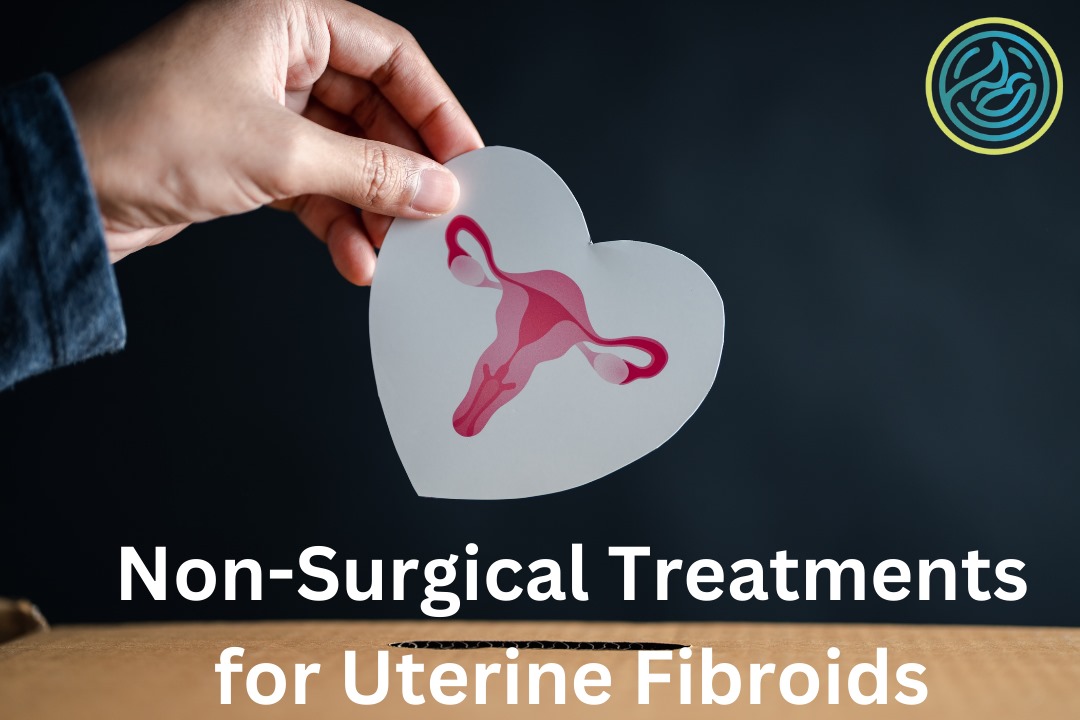
Uterine fibroids are common benign growths in the uterus that can cause disruptive symptoms such as heavy menstrual bleeding, pelvic pressure, and pain. While surgical options exist, there are also effective non-surgical treatments available. Let’s explore these alternatives:
1. Medications
Gonadotropin-Releasing Hormone Antagonists (GnRH Antagonists)
- These FDA-approved drugs block the hormones responsible for ovulation and menstruation.
- While they don’t eliminate fibroids, they significantly reduce their size.
- Effective in treating heavy menstrual bleeding, relieving pain, and minimizing the need for a hysterectomy.
- Administered orally and approved for use up to two years².
2. Focused Ultrasound
Focused Ultrasound Ablation
- A non-invasive procedure that uses high-frequency ultrasound waves to heat and destroy fibroid tissue.
- Requires no incisions or anesthesia.
- Suitable for patients who want to preserve fertility.
3. Uterine Fibroid Embolization (UFE)
UFE Procedure
- Minimally invasive technique performed by interventional radiologists.
- Tiny particles are injected into the uterine arteries, blocking blood flow to the fibroids.
- Results in fibroid shrinkage and symptom relief.
- Recovery time is shorter compared to surgery.
4. Transcervical Radiofrequency Ablation
Radiofrequency Ablation
- A newer approach that targets fibroids through the cervix.
- Radiofrequency energy is used to destroy fibroid tissue.
- Minimal discomfort and quick recovery.
5. Endometrial Ablation
Endometrial Ablation
- Not specific to fibroids but can help manage heavy menstrual bleeding.
- Destroys the uterine lining, reducing bleeding.
- May be combined with other treatments.
Conclusion
Non-surgical treatments offer viable options for managing uterine fibroids. Consult with your healthcare provider to determine the best approach based on your symptoms, fertility goals, and overall health. Remember that early intervention and personalized care can make a significant difference in your quality of life.