
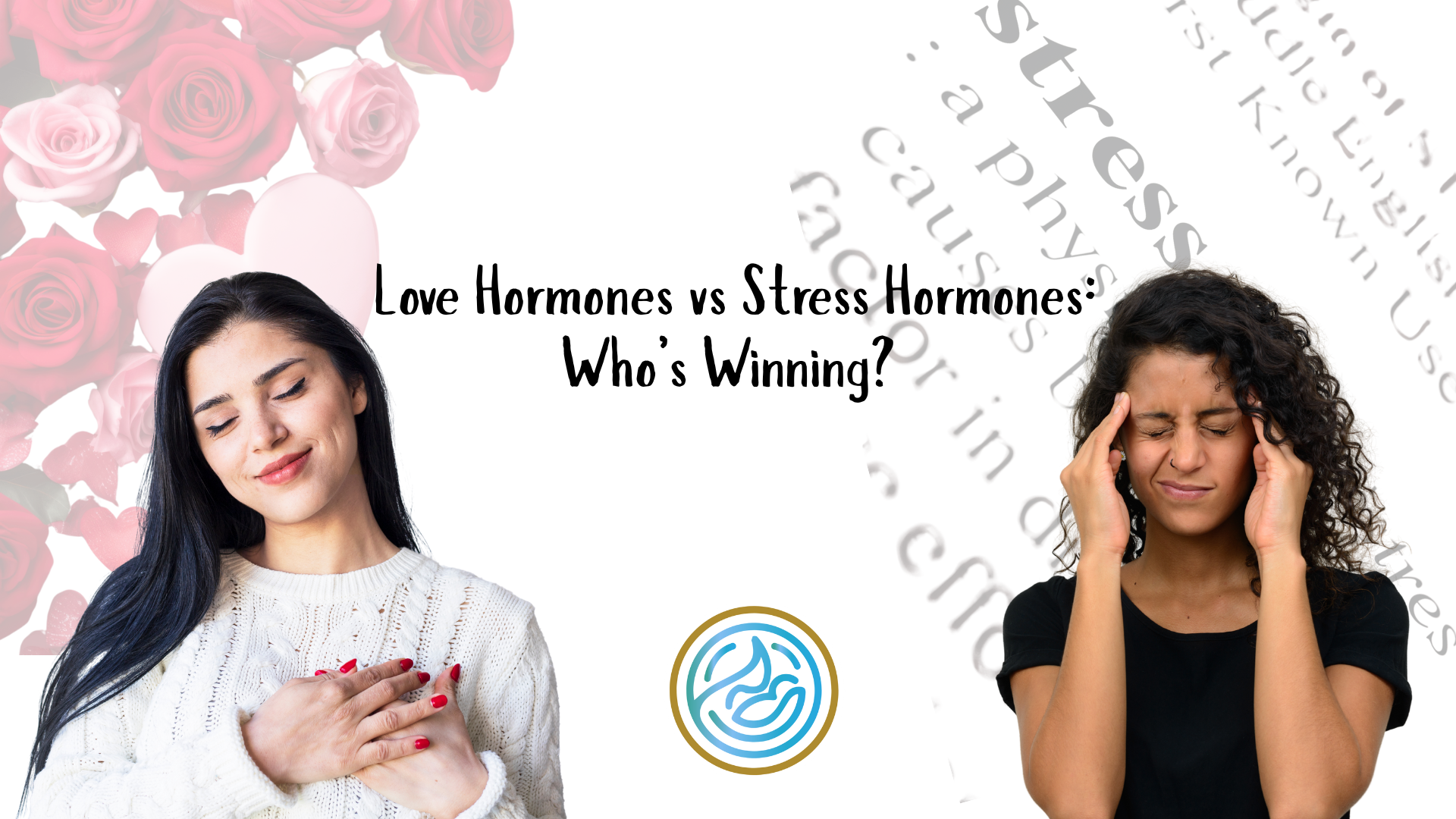
Introduction: The Invisible Tug-of-War Inside the Body
The body is constantly responding to signals, some that promote connection, healing, and reproduction, and others that prioritise survival. Love hormones and stress hormones are not enemies, but when stress dominates for too long, it quietly reshapes reproductive health.
Many women live in a state of chronic stress without realising that their hormones are constantly being redirected away from fertility, pleasure, and repair toward endurance and survival.
Understanding Love Hormones
Love hormones support bonding, safety, reproduction, and emotional wellbeing.
Key Love Hormones Include:
- Oxytocin – bonding, trust, labour, breastfeeding
- Estrogen – cycle regulation, libido, uterine health
- Progesterone – pregnancy support, emotional calm
- Dopamine – pleasure, motivation
These hormones thrive in conditions of safety and rest.
Understanding Stress Hormones
Stress hormones help us respond to threats, but they are not designed to dominate long-term.
Primary Stress Hormones:
- Cortisol – survival, blood sugar regulation
- Adrenaline – acute stress response
- Noradrenaline – alertness
When stress becomes chronic, these hormones suppress reproductive function.
Symptom Checklist: When Stress Hormones Are Winning
| Symptom | Often Dismissed As | What It Signals |
|---|---|---|
| Irregular periods | “Busy life” | Suppressed ovulation |
| Low libido | “Relationship issues” | Hormonal redirection |
| Poor sleep | “Anxiety” | Cortisol dominance |
| Weight gain | “Ageing” | Insulin and cortisol imbalance |
| PMS severity | “Hormones” | Progesterone depletion |
Normal vs Medical Concern: Stress Impact
| Experience | Normal | Medical Concern |
|---|---|---|
| Short-term stress | Temporary cycle shift | Prolonged irregularity |
| Fatigue | Resolved with rest | Persistent exhaustion |
| Mood changes | Occasional irritability | Anxiety, burnout |
| Libido | Fluctuates | Persistent loss |
How Stress Silences Fertility
When the brain perceives danger, emotional, physical, or psychological—it downregulates reproductive hormones.
Chronic Stress Can:
- Suppress ovulation
- Shorten the luteal phase
- Reduce progesterone production
- Alter estrogen balance
This is not failure, it is biological prioritisation.
The Brain Hormone Pelvis Axis
The reproductive system is deeply connected to the brain. Stress signals from the hypothalamus affect:
- Pituitary hormone release
- Ovarian response
- Uterine receptivity
When stress persists, the pelvis becomes a low priority.
Emotional Labour as a Hormonal Stressor
Women often carry invisible workloads:
- Caregiving
- Emotional regulation
- Mental multitasking
These stressors are rarely recognised but significantly impact hormonal balance.
Long-Term Consequences of Chronic Stress Dominance
| System Affected | Impact |
|---|---|
| Reproductive | Irregular cycles, infertility |
| Immune | Increased inflammation |
| Metabolic | Weight resistance |
| Mental health | Anxiety, depression |
| Sexual health | Reduced desire |
Rebalancing Love and Stress Hormones
Balance does not mean eliminating stress, it means restoring safety signals.
Supportive Interventions:
- Sleep regulation
- Gentle movement
- Nutritional support
- Emotional safety
- Boundary setting
Medical evaluation may be needed when imbalance persists.
When to Seek Hormonal Support
You should seek care if:
- Cycles remain irregular for several months
- PMS worsens despite lifestyle changes
- Fatigue is persistent
- Libido loss affects wellbeing
Hormonal imbalance is not a moral failing, it is a medical signal.
Final Thoughts: Safety Restores Fertility
Love hormones flourish in safety, consistency, and rest. Stress hormones dominate when survival feels uncertain. Reproductive health depends on which signals the body hears most often.
The goal is not perfection, but balance.