
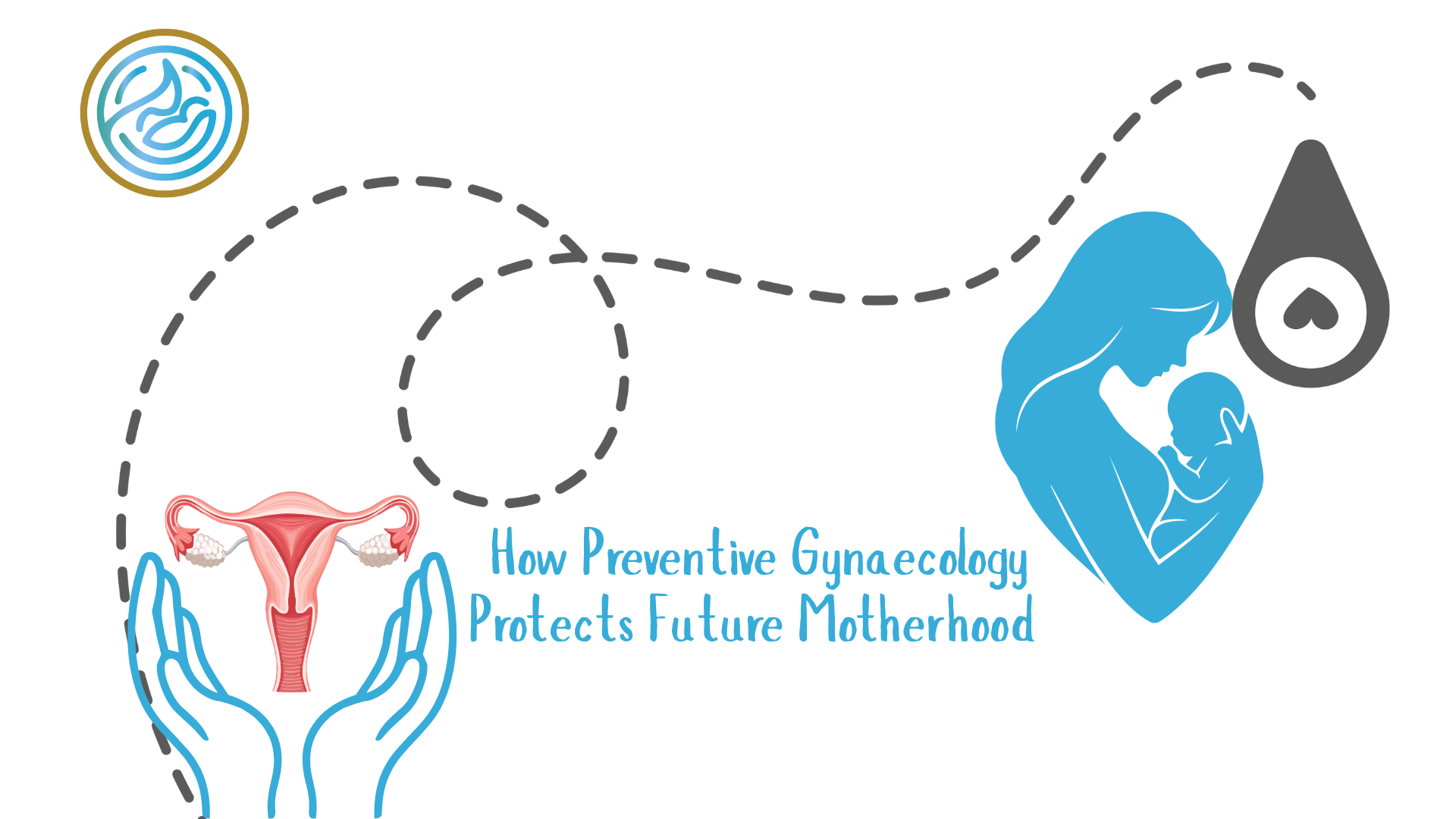
Introduction: Motherhood Begins Long Before Pregnancy
Future motherhood is often imagined as starting with a positive pregnancy test. In reality, the foundations of a healthy pregnancy are laid years before conception. Preventive gynaecology is not about assuming a woman wants children now or at all but about protecting her ability to choose without unnecessary barriers created by preventable disease.
Preventive care shifts gynaecology from crisis management to long-term protection, ensuring that when and if motherhood is desired, the body is ready rather than recovering.
What Preventive Gynaecology Really Means
Preventive gynaecology focuses on anticipation, screening, and early intervention, not waiting for symptoms to escalate.
It Includes:
- Routine pelvic examinations
- Pap smears and HPV screening
- Menstrual cycle assessment
- Hormonal balance monitoring
- Early imaging when symptoms arise
- Infection screening and treatment
This approach treats reproductive health as dynamic, not reactive.
Why Waiting for Pregnancy Is Often Too Late
Many women only seek comprehensive gynaecological care when pregnancy does not happen easily. By then, underlying issues may have progressed unnoticed for years.
Common Conditions Diagnosed Late:
- Endometriosis
- Fibroids
- PCOS
- Tubal damage
- Chronic cervical disease
Early detection can dramatically change outcomes.
Symptom Checklist: Early Signals That Matter
| Early Sign | Often Normalised As | What It May Indicate |
|---|---|---|
| Painful periods | “Just cramps” | Endometriosis |
| Heavy bleeding | “Family trait” | Fibroids, adenomyosis |
| Irregular cycles | “Stress” | PCOS, thyroid dysfunction |
| Pain with intercourse | “Sensitivity” | Pelvic pathology |
| Recurrent infections | “Bad luck” | Altered vaginal or cervical health |
Preventive care identifies patterns before they compromise fertility.
Normal vs Medical Concern: Reproductive Health
| Feature | Normal | Needs Evaluation |
|---|---|---|
| Menstrual pain | Mild, manageable | Disabling or worsening |
| Cycle regularity | Consistent range | Frequent irregularity |
| Bleeding | Predictable flow | Heavy, prolonged, clots |
| Recovery after periods | Rapid | Lingering fatigue |
| Pelvic comfort | Neutral | Persistent discomfort |
How Preventive Care Preserves Fertility
1. Protecting Ovarian Function
Hormonal imbalance and inflammation can impair egg quality long before fertility declines are obvious. Early hormonal support helps maintain:
- Regular ovulation
- Healthy ovarian environment
- Predictable cycles
2. Preserving Uterine Health
The uterus is not just a container, it is an active organ.
Preventive monitoring can detect:
- Fibroids before distortion
- Endometrial abnormalities early
- Inflammatory changes that affect implantation
3. Preventing Tubal Damage
Fallopian tubes are delicate. Untreated infections or inflammation can cause scarring that is often irreversible.
Early screening reduces:
- Tubal infertility
- Ectopic pregnancy risk
- Chronic pelvic pain
The Role of Cervical Health in Motherhood
The cervix plays a vital role in conception and pregnancy maintenance.
Preventive care ensures:
- Healthy cervical mucus for sperm transport
- Early treatment of cervical changes
- Preservation of cervical strength for pregnancy
Late-stage cervical treatment may affect pregnancy outcomes.
Emotional Safety Is Part of Prevention
Preventive gynaecology also protects emotional wellbeing. Women who engage in early care experience:
- Reduced anxiety around fertility
- Greater confidence in their bodies
- Less medical trauma
- More informed decision-making
Fear thrives in uncertainty. Prevention replaces fear with clarity.
Preventive Care vs Crisis Care
| Aspect | Preventive Gynaecology | Crisis-Based Care |
|---|---|---|
| Timing | Early, proactive | Late, reactive |
| Interventions | Minimal | Often invasive |
| Fertility impact | Preserved | Often compromised |
| Emotional cost | Lower | Higher |
| Outcomes | Optimised | Limited by damage |
When to Start Preventive Gynaecology
Preventive care is appropriate:
- In early adulthood
- With onset of menstruation-related symptoms
- When cycles change
- After pregnancy or miscarriage
- During periods of high stress
You do not need a problem to justify prevention.
Why Prevention Is an Act of Respect
Preventive gynaecology respects:
- A woman’s time
- Her future choices
- Her reproductive autonomy
- Her physical and emotional health
It acknowledges that motherhood is not just biological—it is deeply personal.
Final Thoughts: Protecting Choice, Not Forcing Outcomes
Preventive gynaecology does not promise motherhood. It protects the possibility. It allows the body to be supported rather than repaired, listened to rather than overridden.
Future motherhood is safest when it is protected quietly, consistently, and early.