
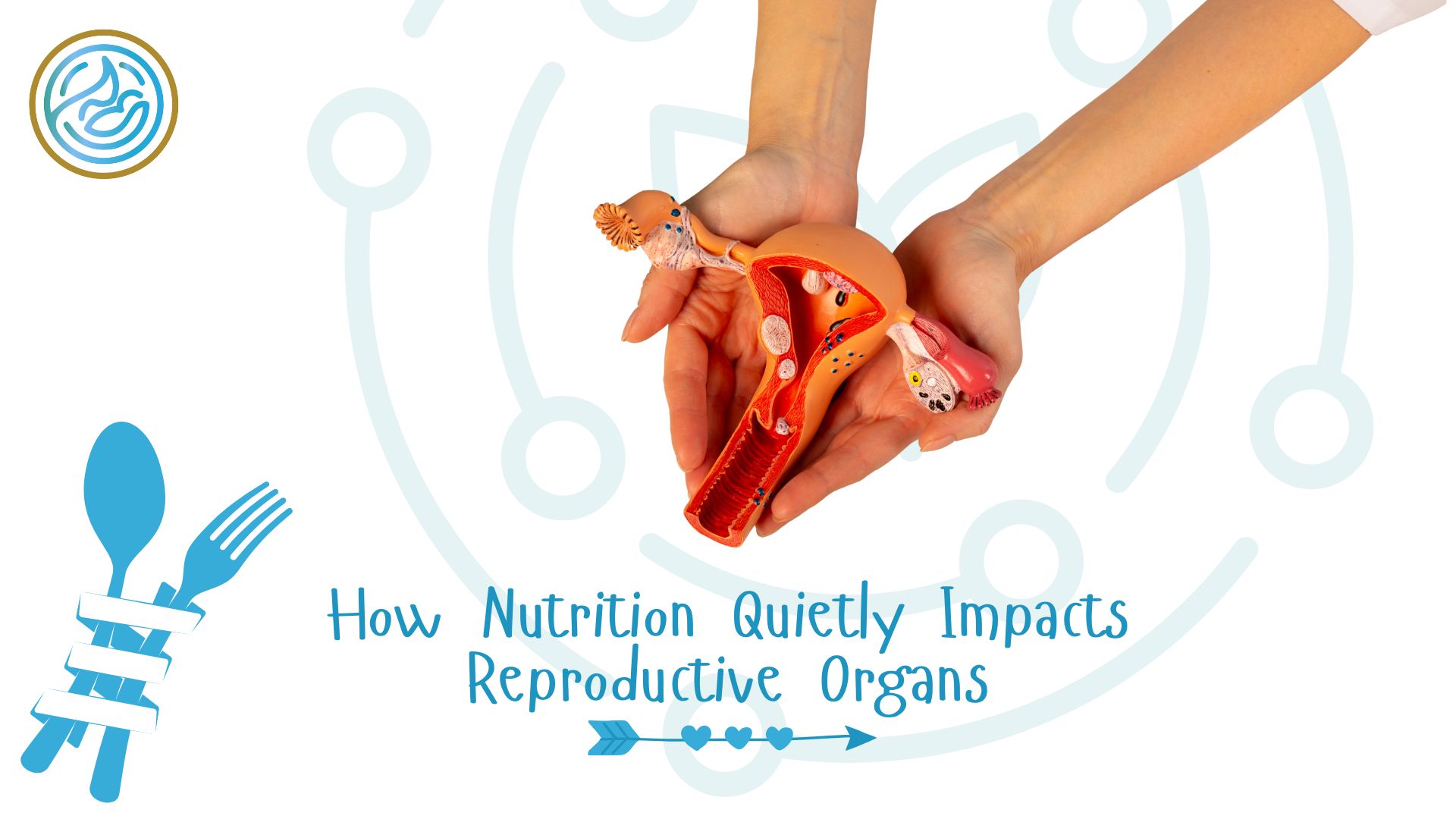
When women think about reproductive health, nutrition is rarely the first thing that comes to mind. Hormones, genetics, stress, and age are usually blamed, while food is framed as a secondary or cosmetic factor, relevant only to weight or energy levels.
In reality, nutrition quietly but powerfully shapes the health of reproductive organs long before symptoms appear. What a woman eats influences hormone production, ovulation, uterine lining health, pelvic inflammation, and even how pain is perceived.
This influence is subtle, cumulative, and often overlooked, which is why its impact is so easy to miss.
Reproductive Organs Are Metabolically Active
The ovaries, uterus, and supporting pelvic tissues are not passive structures. They are metabolically active organs that rely on:
- Adequate micronutrients
- Stable blood sugar
- Efficient detoxification pathways
- Low-grade inflammation control
When nutritional intake is insufficient, inconsistent, or imbalanced, reproductive tissues are often among the first to feel the strain, even if blood tests appear normal.
Nutrition Shapes Hormone Production and Clearance
Hormones do not exist in isolation. They are:
- Synthesised from dietary building blocks
- Transported using protein carriers
- Metabolised by the liver and gut
- Excreted through stool and urine
If any part of this chain is under-supported nutritionally, hormonal signalling becomes less efficient.
For example:
- Low protein intake can impair hormone transport
- Inadequate fibre can disrupt estrogen clearance
- Poor fat quality affects steroid hormone synthesis
These changes often occur gradually and quietly.
Early Reproductive Symptoms Linked to Nutrition
Before structural or hormonal conditions are diagnosed, women often experience subtle reproductive changes linked to nutritional patterns.
Symptom Checklist: Nutrition-Related Reproductive Clues
Symptom | Often Attributed To | Possible Nutritional Link |
Irregular cycles | Stress | Blood sugar instability |
Heavy periods | “Just how I bleed” | Iron, vitamin A, inflammation |
Worsening PMS | Hormones alone | Magnesium, B vitamins |
Pelvic pain | Unknown | Inflammatory load |
Delayed ovulation | Cycle variation | Energy deficiency |
Recurrent infections | Bad luck | Gut–immune nutrient support |
These symptoms are rarely caused by a single nutrient deficiency, but rather by patterns of undernourishment or imbalance over time.
Blood Sugar Stability and the Ovaries
One of the most underestimated influences on reproductive organs is blood sugar regulation.
Frequent blood sugar spikes and crashes can:
- Increase ovarian stress
- Disrupt ovulation signals
- Elevate inflammatory markers
- Influence androgen production
This does not only apply to diagnosed metabolic conditions. Even women with a “healthy” weight may experience reproductive disruption if meals are skipped, heavily processed, or poorly balanced.
Reproductive organs are highly sensitive to energy availability.
The Uterus and Inflammation
The uterus responds to hormonal cues by thickening, shedding, and regenerating tissue every cycle. This process depends on controlled inflammation.
When nutrition promotes chronic low-grade inflammation through:
- Excess ultra-processed foods
- Poor omega-3 to omega-6 balance
- Micronutrient depletion
— uterine processes can become exaggerated or inefficient.
This may present as:
- Heavier bleeding
- Increased cramping
- Prolonged spotting
- Greater pelvic discomfort
Again, these changes are often normalised rather than investigated.
Normal vs Medical: Nutritional Influence on Reproductive Health
Nutrition-related reproductive changes are often dismissed because they are gradual.
Table: Expected Variation vs Nutritional Strain
Change | Often Considered Normal | When Nutrition May Be Contributing |
PMS | Mild mood changes | Escalating emotional or physical symptoms |
Period pain | Occasional cramps | Pain increasing over time |
Cycle length | Minor variation | Repeated irregularity |
Energy levels | Monthly dips | Ongoing fatigue linked to cycle |
Recovery after periods | 1–2 days | Prolonged exhaustion |
The body often adapts silently until it cannot anymore.
The Gut–Reproductive Axis
The gut plays a crucial role in reproductive health, particularly through estrogen metabolism.
A well-functioning gut:
- Binds excess estrogen
- Supports hormone elimination
- Regulates immune signalling
When gut health is compromised through low fibre intake, disrupted microbiota, or chronic digestive stress, estrogen can be reabsorbed rather than cleared.
This can quietly contribute to:
- Estrogen-dominant symptom patterns
- Breast tenderness
- Bloating
- Heavy or painful periods
These links are rarely explained to women experiencing symptoms.
Why Nutritional Impact Is Often Missed in Medicine
Nutrition does not cause immediate, dramatic disease. Its effects are:
- Slow
- Cumulative
- Context-dependent
Medical systems are trained to identify acute pathology, not gradual depletion. As long as blood tests are “within range,” nutritional influence may not be considered even though tissue-level deficiency can exist without overt lab abnormalities.
Reproductive organs may be functioning, but not optimally.
Eating “Enough” vs Eating “Supportively”
Many women eat regularly but still under-support their reproductive system. This can happen when:
- Meals are calorie-focused rather than nutrient-focused
- Fat intake is chronically low
- Protein is inconsistent
- Micronutrient needs increase due to stress, pregnancy, or recovery
Reproductive health requires adequacy, not restriction.
When Nutrition Deserves Closer Attention
Women should consider nutritional assessment when:
- Reproductive symptoms are progressive
- Hormonal symptoms persist despite “normal” tests
- Periods are becoming heavier, more painful, or more irregular
- Recovery after pregnancy or illness feels slow
- Energy fluctuates markedly across the cycle
Nutrition is not a replacement for medical care but it is often a missing foundation.
Reframing Nutrition in Women’s Health
Nutrition should not be viewed as an optional lifestyle add-on. It is part of the biological infrastructure that allows reproductive organs to function smoothly.
Supporting reproductive health nutritionally is not about perfection, it is about consistency, sufficiency, and respect for the body’s cyclical demands.
Many reproductive symptoms are not failures of the body, but signals of unmet needs.
Key Takeaway
Reproductive organs respond quietly to what they are given every day. Nutrition shapes their resilience long before dysfunction is visible and listening early can prevent deeper imbalance later.