
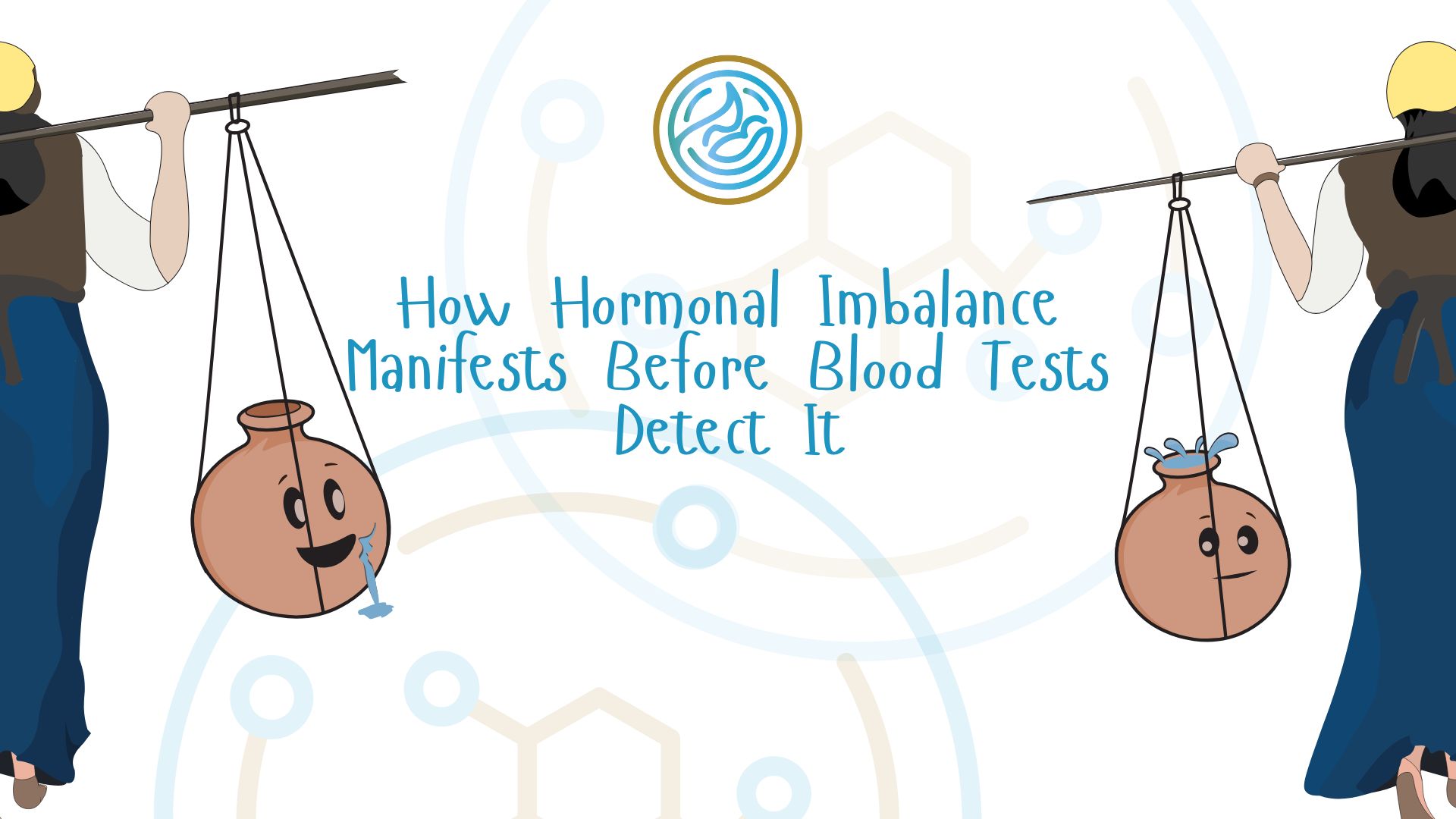
Hormonal imbalance is often spoken about as something that can be easily confirmed a blood test, a number, a clear answer. Yet in clinical reality, many women experience months or even years of symptoms long before any test result appears “abnormal.”
They are told their hormones are fine. Their blood work is normal. And yet, their body is clearly telling a different story.
This disconnect between lived symptoms and laboratory results is one of the most frustrating aspects of women’s healthcare. Understanding why it happens and how hormonal imbalance actually manifests, is essential for earlier recognition and better care.
Hormones Are Dynamic, Not Static
Hormones are not fixed values. They fluctuate:
- Hour to hour
- Day to day
- Across the menstrual cycle
- In response to stress, sleep, nutrition, and illness
A single blood test captures one moment in time, often without accounting for:
- Cycle phase
- Symptom timing
- Individual baseline variation
This is why early hormonal imbalance can exist even when results fall within “normal ranges.”
Normal ranges are population-based, they are not the same as optimal or normal for you.
Early Hormonal Imbalance Is Often Functional
Before hormones become measurably abnormal, the body often enters a functional imbalance phase. In this stage:
- Hormone levels may technically be within range
- The relationship between hormones is altered
- Tissue sensitivity to hormones changes
- Feedback loops become strained
This phase is clinically significant, even if it is not yet visible on standard testing.
Common Early Symptoms Women Experience First
Women usually feel hormonal changes long before labs confirm them. These symptoms are frequently dismissed because they are vague, cyclical, or multifactorial.
Symptom Checklist: Early Signs of Hormonal Imbalance
Symptom | Common Explanation Given | Hormonal Processes Involved |
Shorter or longer cycles | “Stress” | Progesterone disruption |
PMS worsening with age | “Normal ageing” | Estrogen-progesterone imbalance |
Sleep disturbance | “Lifestyle” | Cortisol–melatonin interaction |
New anxiety or low mood | “Mental health only” | Estrogen and serotonin shifts |
Bloating before periods | “Diet” | Estrogen metabolism |
Breast tenderness | “Cycle-related” | Estrogen dominance patterns |
Low libido | “Relationship factors” | Androgen and estrogen changes |
These symptoms are not imagined. They are early warning signals.
Why Blood Tests Can Miss Early Imbalance
There are several reasons routine tests may appear normal despite symptoms.
1. Timing of Testing
Hormones vary dramatically depending on the day of the cycle. Testing at the wrong time can obscure imbalance.
2. Wide Reference Ranges
What is “normal” for one woman may be symptomatic for another. Many women feel unwell at levels that are technically acceptable.
3. Tissue-Level Sensitivity
Hormone action depends not only on blood levels, but on:
- Receptor sensitivity
- Cellular response
- Local conversion of hormones in tissues
These factors are not measured on standard labs.
4. Compensatory Mechanisms
The body often compensates for imbalance temporarily. This compensation can mask abnormalities on tests until it can no longer keep up.
Normal vs Medical: Hormonal Changes in Context
Hormonal shifts are a natural part of life, but not all changes are benign.
Table: Normal Hormonal Variation vs Early Imbalance
Hormonal Change | Often Considered Normal | When It Signals Imbalance |
PMS | Mild irritability | Mood disruption or pain |
Cycle changes | Occasional variation | Repeated irregularity |
Fatigue | Busy life | Persistent, cyclical exhaustion |
Weight changes | Age-related | Rapid or unexplained shifts |
Mood swings | Hormonal | Anxiety or low mood tied to cycle |
The pattern and impact of symptoms matter more than isolated lab values.
The Role of Stress and Cortisol
One of the most common early drivers of hormonal imbalance is chronic stress.
Cortisol, the body’s stress hormone, influences:
- Progesterone production
- Thyroid hormone conversion
- Blood sugar regulation
- Sleep–wake cycles
Elevated or dysregulated cortisol can disrupt reproductive hormones without altering blood test results initially.
Women may notice:
- Shortened luteal phase
- Worsening PMS
- Increased anxiety
- Poor sleep before periods
Again, the body feels it before tests show it.
Why Women Are Often Told “Everything Is Fine”
Healthcare systems are designed to detect disease, not early dysfunction. If tests do not meet diagnostic thresholds, reassurance is often offered instead of exploration.
While reassurance has its place, it can become dismissive when symptoms persist.
A more accurate message would be:
“Your tests are within range, but your symptoms suggest your body is under strain.”
That distinction matters.
Listening to Patterns, Not Just Numbers
Early hormonal imbalance is best identified by patterns:
- Symptom timing within the cycle
- Changes over months or years
- Response to stress, sleep, or nutrition
- Shifts after pregnancy, illness, or life transitions
These patterns provide clinical information that no single blood test can replace.
When to Seek Deeper Evaluation
Women should consider further assessment when:
- Symptoms are cyclical and worsening
- Quality of life is affected
- Changes feel new or progressive
- Reassurance does not match lived experience
This may involve:
- Repeat or timed hormone testing
- Broader metabolic assessment
- Evaluation of lifestyle and stress physiology
- Clinical correlation rather than lab reliance alone
Reframing Hormonal Health
Hormonal imbalance is not a sudden event, it is often a gradual process. By the time blood tests are clearly abnormal, symptoms may have been present for years.
Validating early symptoms allows for:
- Earlier intervention
- Gentler correction
- Prevention of long-term disruption
Women should not have to wait for their blood work to “prove” their experience.
Key Takeaway
Hormones speak through symptoms first and numbers later. When your body feels different, it is worth listening, even if tests say everything is normal.