
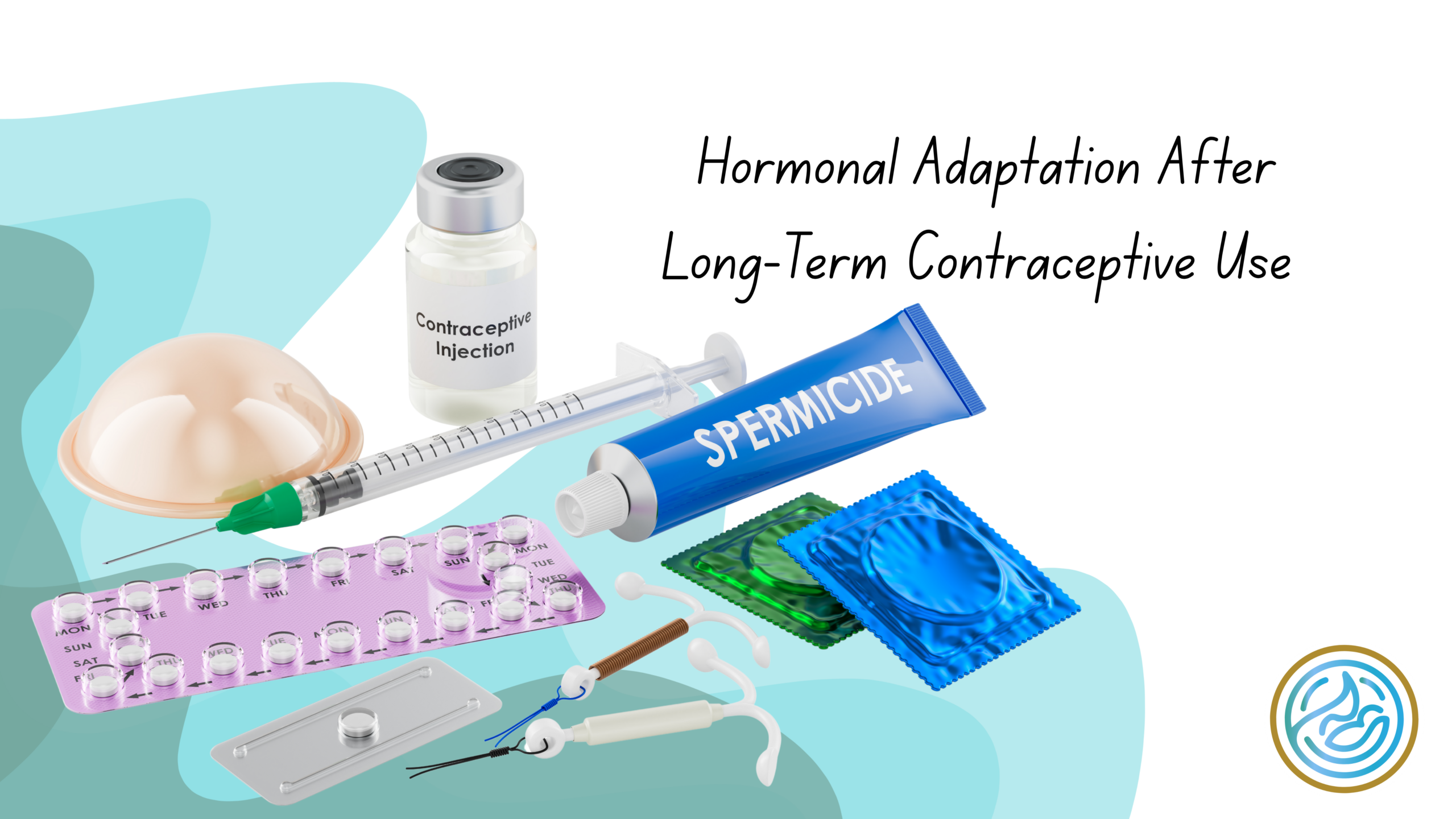
Hormonal contraceptives are widely used for pregnancy prevention, cycle regulation, and management of various gynaecological conditions. While they are highly effective and beneficial for many women, their long-term use can influence the body’s natural hormonal rhythm.
When contraception is stopped, the body does not always return to its baseline immediately. Instead, it goes through a period of hormonal adaptation, a transition phase that can come with unexpected symptoms and changes.
Understanding this process helps women set realistic expectations, recognise what is normal, and identify when medical support may be needed.
How Hormonal Contraceptives Work
Hormonal contraceptives (such as pills, injections, implants, and hormonal IUDs) function by:
- Suppressing ovulation
- Altering cervical mucus
- Thinning the uterine lining
Most importantly, they override the body’s natural hormone cycle by supplying synthetic hormones.
What Happens After Stopping Contraceptives?
Once contraceptives are discontinued:
- Synthetic hormones leave the body
- The brain must re-signal the ovaries
- Natural hormone production resumes
This process involves the hypothalamic–pituitary–ovarian (HPO) axis, which may take time to fully reactivate.
The Hormonal Adjustment Phase
This phase varies widely between individuals.
Typical Timeline
Time After Stopping | What May Happen |
First 1–4 weeks | Hormone levels drop, withdrawal bleed may occur |
1–3 months | Cycle may be irregular or absent |
3–6 months | Ovulation may gradually normalise |
6–12 months | Full hormonal balance may return |
Common Symptoms During Hormonal Adaptation
As the body recalibrates, symptoms may emerge.
Symptom Checklist
Symptom | Why It Happens |
Irregular periods | Ovulation not yet consistent |
Acne | Increase in androgens after stopping hormones |
Mood changes | Hormonal fluctuations |
Breast tenderness | Hormonal sensitivity |
Bloating | Fluid retention and hormonal shifts |
Hair shedding | Temporary hormonal imbalance |
Reproductive-Specific Changes
Change | Explanation |
Delayed ovulation | Ovaries taking time to resume function |
Heavier periods | Uterine lining rebuilding |
Return of PMS | Natural cycle re-emerging |
Cycle variability | Hormonal signalling still stabilising |
Normal vs Concerning Recovery Patterns
Feature | Normal | Concerning |
Return of periods | Within 3 months | Absent beyond 3–6 months |
Cycle regularity | Initially irregular | Persistently unpredictable after 6–12 months |
Acne | Mild, temporary | Severe or worsening |
Mood changes | Fluctuating but manageable | Persistent or severe |
Hair shedding | Temporary | Prolonged or excessive |
Why Some Women Struggle More Than Others
Hormonal adaptation is influenced by several factors:
1. Duration of Contraceptive Use
Longer use may mean:
- Greater suppression of natural cycles
- Longer recovery time
2. Underlying Conditions
Contraceptives can mask conditions such as:
- Polycystic ovarian syndrome (PCOS)
- Endometriosis
- Thyroid disorders
Symptoms may reappear once contraception is stopped.
3. Metabolic Health
Factors like insulin resistance or inflammation can delay recovery.
4. Stress and Lifestyle
High stress levels can suppress ovulation, prolonging irregular cycles.
Post-Contraceptive Syndrome: Is It Real?
Some women experience a cluster of symptoms after stopping hormonal contraception, often referred to as post-contraceptive syndrome.
While not always formally diagnosed, it may include:
- Persistent cycle irregularities
- Acne
- Mood disturbances
- Fatigue
These symptoms are usually linked to underlying imbalances rather than the contraceptive itself.
Fertility After Stopping Contraceptives
A common concern is how quickly fertility returns.
Key Points:
- Ovulation can occur as early as 2–4 weeks after stopping
- For some women, it may take several months
- Long-term contraceptive use does not permanently reduce fertility
However, underlying conditions may affect conception.
Supporting Hormonal Recovery
1. Nutrition
Focus on hormone-supportive foods:
- Healthy fats (essential for hormone production)
- Protein-rich meals
- Leafy greens and whole foods
2. Cycle Awareness
Tracking helps identify patterns:
- Menstrual cycle length
- Ovulation signs
- Symptom changes
3. Stress Management
Reducing stress supports the HPO axis:
- Adequate sleep
- Gentle exercise
- Mindfulness practices
4. Medical Evaluation
If symptoms persist, assessment may include:
- Hormonal testing
- Ultrasound
- Metabolic screening
When to Seek Medical Attention
Women should consult a healthcare provider if they experience:
- No periods after 3–6 months
- Severe acne or hair loss
- Persistent pelvic pain
- Difficulty conceiving after 6–12 months
- Symptoms that worsen over time
Why This Topic Matters
Many women stop contraceptives expecting an immediate return to normal cycles. When this does not happen, it can cause confusion and anxiety.
Understanding hormonal adaptation helps:
- Set realistic expectations
- Reduce unnecessary worry
- Encourage timely medical support when needed
Common Misconceptions
Myth | Reality |
“Your cycle should return immediately” | It often takes time |
“Contraceptives damage fertility” | They do not cause permanent infertility |
“Symptoms mean something is wrong” | Many are part of normal adjustment |
“Irregular cycles are normal long-term” | Persistent irregularity should be evaluated |
Final Thoughts
Hormonal adaptation after long-term contraceptive use is a natural process but it is not always immediate or symptom-free.
The body needs time to re-establish its hormonal rhythm. While many changes are temporary, persistent symptoms should not be ignored.
With the right support, awareness, and care, most women can regain hormonal balance and return to a healthy, functioning cycle.