
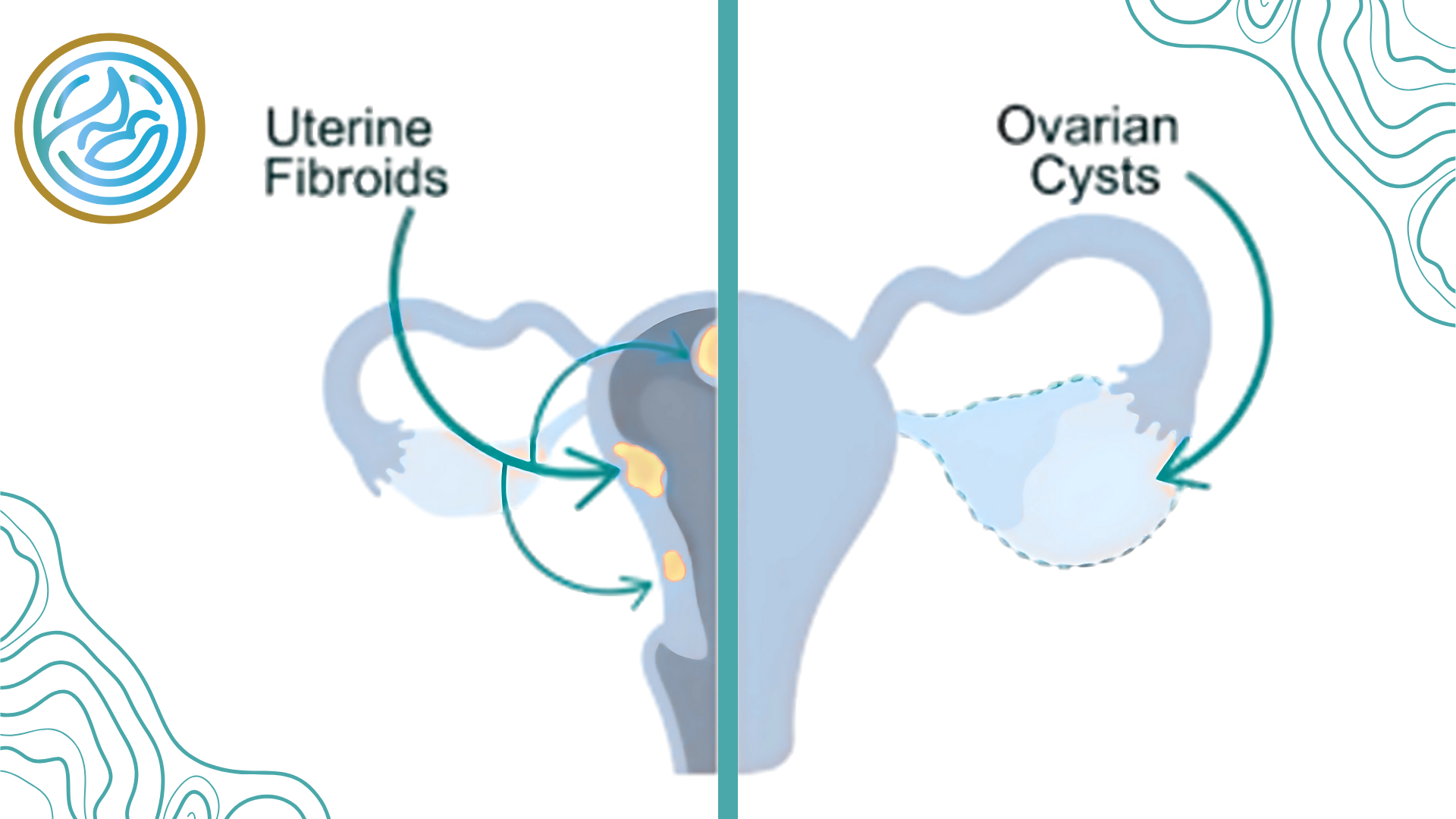
When it comes to women’s reproductive health, the terms fibroids and ovarian cysts are often mentioned, and often misunderstood. Although they can cause similar symptoms such as pelvic pain, heavy periods, and bloating, fibroids and cysts are entirely different in structure, origin, and treatment.
In this blog, we’ll explore:
- What fibroids and cysts are
- Their symptoms
- Causes
- Diagnosis
- Treatment options
- Key differences
What Are Fibroids?
Fibroids, also called uterine fibroids or leiomyomas, are non-cancerous growths that form in or on the uterus. They are made of muscle and fibrous tissue and can vary in size from as small as a seed to as large as a melon.
Types of Fibroids
Type | Location | Description |
Intramural | Within the uterine wall | Most common type |
Subserosal | Outside of uterus | Can press on bladder or bowel |
Submucosal | Inside uterine cavity | Often causes heavy bleeding |
Pedunculated | Attached by a stalk | Can twist, causing pain |
What Are Ovarian Cysts?
Ovarian cysts are fluid-filled sacs or pockets that form on or inside an ovary. Many women will develop at least one cyst in their lifetime. Most are harmless and disappear on their own.
Types of Ovarian Cysts
Type | Description | Commonality |
Functional | Related to menstrual cycle (follicular or corpus luteum) | Very common |
Dermoid | Contains tissue like hair or teeth | Congenital, rare |
Endometrioma | Linked to endometriosis | Painful, may affect fertility |
Cystadenoma | Develops from ovarian tissue | Can become large |
Symptoms: Fibroids vs. Cysts
While some fibroids and cysts cause no symptoms at all, others may lead to significant discomfort. Here’s a comparison:
Symptom | Fibroids | Ovarian Cysts |
Pelvic pain/pressure | Yes | Yes |
Bloating | Sometimes | Common |
Irregular bleeding | Common | Less common |
Heavy periods | Very common | Rare |
Pain during sex | Sometimes | Yes |
Frequent urination | If pressing bladder | Unlikely |
Lower back pain | Yes | Sometimes |
Trouble getting pregnant | Sometimes | Sometimes |
What Causes Them?
Causes of Fibroids
- Hormones: Estrogen and progesterone fuel fibroid growth.
- Genetics: Family history increases risk.
- Obesity: Higher BMI increases the chance.
- Ethnicity: More common and severe in Black women.
Causes of Ovarian Cysts
- Hormonal imbalance: Particularly in functional cysts.
- Pregnancy: Cysts may form early in pregnancy.
- Endometriosis: Can lead to endometriomas.
- Pelvic infections: Can cause abscess-type cysts.
Diagnosis
Method | Fibroids | Cysts |
Pelvic exam | Can detect large fibroids | May reveal large cysts |
Ultrasound | Best for identifying size/location | Most common cyst detection tool |
MRI | Used for detailed fibroid mapping | Rarely needed |
Blood tests (CA-125) | Sometimes, to rule out cancer | Used when cysts look abnormal |
Treatment Options
For Fibroids
Option | When Used |
Watchful waiting | If small and symptom-free |
Medications | Hormone therapy (GnRH agonists) to shrink fibroids |
Non-invasive procedures | MRI-guided ultrasound |
Minimally invasive surgery | Laparoscopic or hysteroscopic myomectomy |
Major surgery | Hysterectomy (removal of uterus) in severe cases |
For Ovarian Cysts
Option | When Used |
No treatment | Most functional cysts go away on their own |
Birth control pills | Prevent new cysts from forming |
Surgery | For large, painful, or suspicious cysts (cystectomy or oophorectomy) |
When to See a Doctor
Contact your gynecologist if you experience:
- Severe or persistent pelvic pain
- Heavy or irregular periods
- Pain during sex or bowel movements
- Unexplained weight gain or bloating
- Trouble urinating or passing stools
- Difficulty conceiving
Early detection helps prevent complications and gives you more treatment options.
Key Differences: Summary Table
Feature | Fibroids | Ovarian Cysts |
Nature | Solid tissue growths | Fluid-filled sacs |
Location | In or on the uterus | On or inside the ovaries |
Cause | Hormonal and genetic | Hormonal, endometriosis, infections |
Menstrual impact | Heavy bleeding, prolonged periods | Usually no effect unless large |
Pain | Pelvic pressure, back pain | Sudden sharp pain (if ruptures or twists) |
Fertility impact | Can interfere with implantation or pregnancy | May block ovulation or damage ovaries |
Common in | Women aged 30–50 | Women of all reproductive ages |
Conclusion
While fibroids and cysts are both common reproductive health issues, they differ significantly in terms of structure, symptoms, causes, and treatment. Understanding these differences is essential for making informed decisions about your health.
If you suspect that you might have fibroids or ovarian cysts, don’t wait for symptoms to worsen. Book a consultation with us. With proper diagnosis and treatment, most women can manage or eliminate these conditions and go on to live healthy, fulfilling lives.