
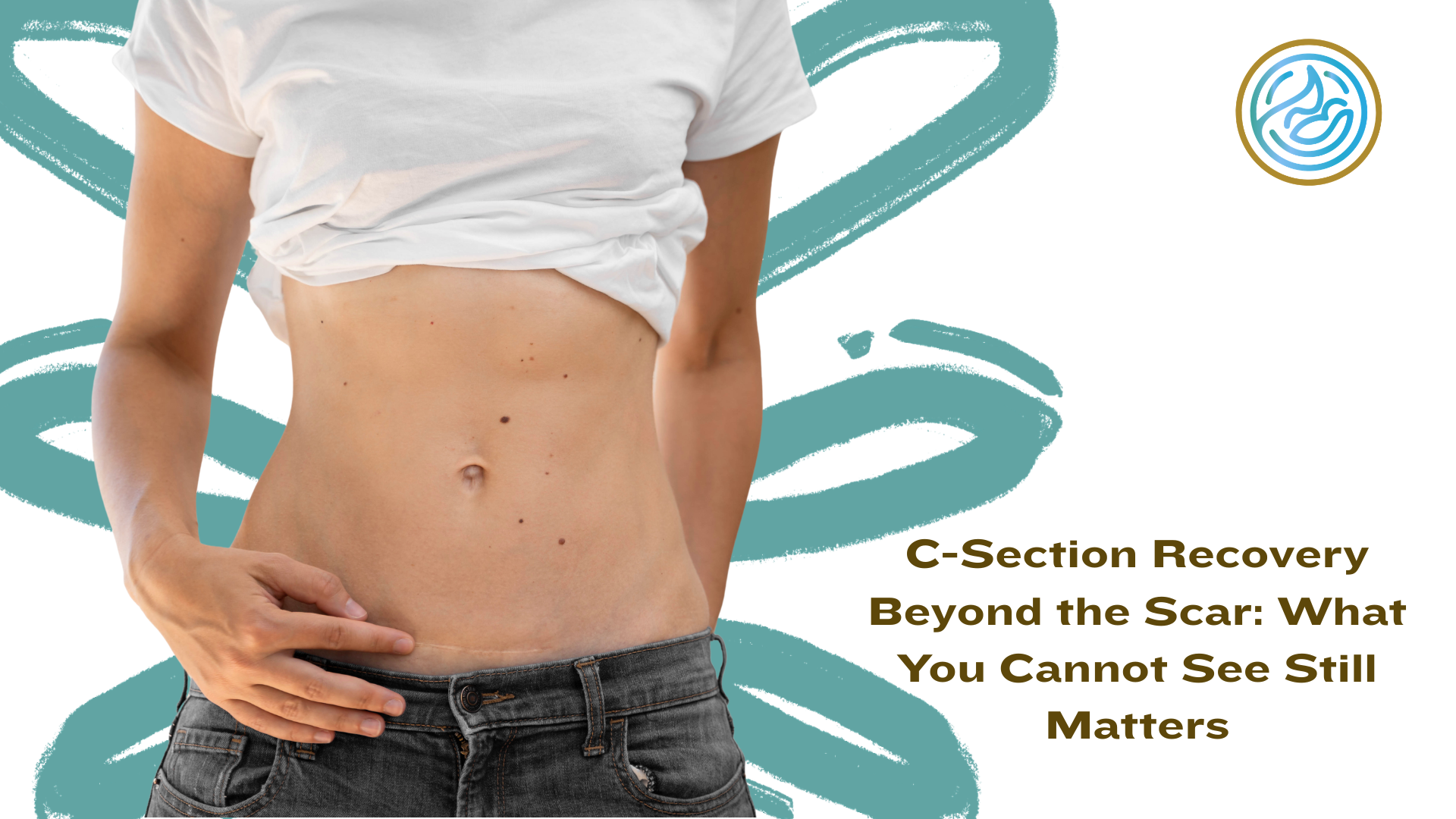
Understanding internal healing, persistent pain, abdominal changes and when to seek medical care after a caesarean birth
When you have a caesarean section, one of the first things you may focus on is your incision. You watch it heal, follow wound-care instructions and wait for the soreness to disappear. Eventually, the scar may look much better, and you may feel ready to return to your usual routine.
But what happens when the wound looks completely healed and you still do not feel like yourself?
Perhaps you experience pulling sensations when you stretch, pain deep inside your abdomen, numbness around the scar, discomfort during sex or weakness when lifting your baby. You may wonder whether these symptoms are normal or whether something has been missed.
The important thing to understand is that a caesarean section is major abdominal surgery, and healing involves much more than the skin you can see.
Although many women recover well, internal tissues, abdominal muscles and nerves may take time to heal. Some symptoms improve gradually, while others need assessment and treatment. Knowing the difference can help you protect your recovery and recognise complications early.
1. What happens beneath the C-section scar?
During a caesarean section, a surgeon makes an incision through the abdominal wall and uterus to deliver the baby. The procedure involves several layers of tissue, including skin, connective tissue and the uterine wall.
These tissues are carefully closed after delivery, but they heal at different rates.
The skin may appear closed before deeper tissues have fully recovered. Scar tissue forms as part of the body’s normal healing process, and the surrounding nerves and muscles may need additional time to recover.
This is why you may notice:
- Tightness when standing upright or stretching.
- Tenderness around or below the incision.
- Numbness, tingling or unusual sensitivity.
- Discomfort when coughing, laughing or getting out of bed.
- A pulling sensation during movement.
- Weakness in the abdominal muscles.
Some of these sensations can occur during recovery, especially in the early weeks. However, persistent, worsening or severe symptoms should not automatically be attributed to normal healing.
There is no single timeline for every woman. Your recovery may be influenced by the type of surgery, complications, previous abdominal operations, infection, general health and how much physical strain you experience while caring for your baby.
2. Why does your scar still hurt when it looks healed?
A healed incision does not necessarily mean every tissue underneath has recovered completely.
Several factors can contribute to discomfort around a caesarean scar.
Scar tissue and tightness
As the incision heals, the body forms scar tissue. This tissue can sometimes feel firmer or less flexible than the surrounding skin.
You may notice pulling when you twist, stretch, stand up or change position. Some women also experience discomfort when clothing presses against the scar.
Persistent tightness or pain that limits movement may benefit from assessment by a healthcare professional or a physiotherapist experienced in postpartum recovery.
Nerve irritation or injury
Small nerves in the abdominal wall can be stretched, irritated or affected during surgery. As a result, the skin near the scar may feel numb, prickly, burning or unusually sensitive.
A small area of altered sensation can persist after surgery. However, severe burning pain, increasing sensitivity or symptoms that interfere with daily activities deserve assessment.
Deeper abdominal or pelvic pain
Pain that feels as though it is coming from inside the abdomen may have several possible causes. These include muscular problems, scar-related discomfort, infection, hernia or unrelated abdominal and gynaecological conditions.
Do not assume that deep abdominal pain is caused by the incision simply because you previously had a caesarean section.
Seek urgent medical care if pain is severe or worsening, or if it occurs with fever, vomiting, faintness, heavy vaginal bleeding or a swollen, painful abdomen.
3. What is normal, and what should not be ignored?
The following table can help you decide when to monitor symptoms and when to seek care.
| Symptom | May occur during recovery | When to seek medical attention |
|---|---|---|
| Mild tenderness around the scar | Common, particularly early after surgery | Pain worsens, becomes severe or returns after improving |
| Numbness around the incision | Small areas may remain numb for months | Symptoms are extensive, worsening or accompanied by significant pain |
| Pulling or tightness | May occur with stretching or movement | Persistent tightness limits movement or daily activities |
| Itching around the scar | Can occur as the skin heals | Increasing redness, heat, swelling, discharge or spreading rash develops |
| Abdominal weakness | May follow pregnancy and surgery | You have persistent weakness, painful bulging or difficulty with everyday activities |
| Pain during sex | May relate to dryness, pelvic floor changes or scar discomfort | Pain persists, worsens or occurs with bleeding or unusual discharge |
| Fever or wound discharge | Not expected as a routine healing symptom | Requires prompt assessment, especially with redness or increasing pain |
The severity, timing and combination of symptoms matter. When in doubt, seek medical advice rather than relying on appearance alone.
4. Why does your stomach still look or feel different?
After a caesarean birth, your abdomen may remain softer, swollen or less firm than before pregnancy.
This does not necessarily mean something has gone wrong.
Pregnancy stretches the abdominal muscles and connective tissues. Some women develop diastasis recti, a separation between the two sides of the abdominal muscles. This can cause a visible ridge or bulge along the middle of the abdomen during certain movements.
Your body may also retain changes in skin elasticity and fat distribution after pregnancy. The lower abdomen may fold over the incision, and the scar may sit within a crease.
However, it is important to distinguish ordinary body changes from symptoms that require investigation.
Arrange an assessment if you notice:
- A new or increasingly prominent bulge near the incision.
- A bulge that becomes more noticeable when coughing or straining.
- Persistent abdominal pain or pressure.
- A painful lump around the scar.
- Ongoing weakness that makes lifting, walking or other everyday tasks difficult.
A hernia is one possible cause of a bulge near a surgical incision, although not every bulge is a hernia. A clinician can examine the area and decide whether further tests are needed.
Can you exercise after a C-section?
Yes, exercise can be part of recovery, but it should be introduced gradually and according to your healing and symptoms.
Start with gentle movement, such as short walks, if your healthcare team has advised that it is appropriate. Increase activity progressively rather than immediately returning to heavy lifting, high-impact exercise or intense abdominal workouts.
If you notice pain, abdominal doming, pelvic heaviness or increased bleeding during activity, reduce the intensity and seek guidance.
A postpartum physiotherapist can help assess abdominal strength, movement patterns and pelvic floor function.
5. Can a C-section affect your pelvic floor?
Yes. Although a caesarean section avoids vaginal delivery, pregnancy itself places considerable pressure on the pelvic floor.
The pelvic floor supports the bladder, bowel and pelvic organs. Pregnancy-related changes can contribute to weakness or poor muscle coordination, regardless of the mode of delivery.
You may experience:
- Urine leakage when coughing, sneezing or laughing.
- Pelvic heaviness or pressure.
- Difficulty controlling wind.
- Constipation or difficulty emptying your bowels.
- Discomfort during sexual activity.
These symptoms are not something you must simply accept after having a baby.
Pelvic floor rehabilitation may help, but treatment should be based on an individual assessment. Some women need strengthening, while others need help relaxing tight muscles and improving coordination.
Seek urgent assessment if you develop new loss of bladder or bowel control alongside severe back pain or numbness around the groin.
6. Why does sex feel different after a C-section?
You might expect sex to feel exactly as it did before pregnancy because you did not deliver vaginally. However, childbirth can affect sexual comfort regardless of how your baby was delivered.
Possible causes of discomfort include:
- Lower oestrogen levels during breastfeeding, which can contribute to vaginal dryness.
- Pelvic floor muscle weakness or tension.
- Abdominal tenderness or scar sensitivity.
- Fatigue, stress and reduced sexual desire.
- Fear of pain or another pregnancy.
If you experience discomfort, do not force yourself to continue. Allow time for recovery, consider a suitable lubricant and communicate with your partner about what feels comfortable.
Persistent pain, pain deep in the pelvis, bleeding after sex or unusual vaginal discharge should be assessed by a healthcare professional. Treatment depends on the cause and may involve pelvic floor physiotherapy or other medical care.
7. Can internal C-section problems appear months later?
Some complications become apparent after the initial recovery period, although many women do not experience any major complications.
Potential causes of later symptoms include:
Adhesions: These are bands of scar tissue that can form between tissues or organs after surgery. Many adhesions cause no symptoms. In some cases, they may be associated with chronic pain or bowel complications. Pain alone cannot confirm that adhesions are present.
Incisional hernia: A weakness in the abdominal wall may allow tissue to bulge near the incision. This can appear as a lump that becomes more noticeable when standing, coughing or straining.
Scar endometriosis: Rarely, endometrial-like tissue can develop in a caesarean scar. A concerning pattern is a lump or pain near the scar that becomes worse around menstruation. This needs medical assessment.
Infection: A wound infection generally causes symptoms such as redness, warmth, swelling, discharge or increasing pain. Deeper infections may also cause fever or feeling unwell.
These conditions have different causes and treatments. Do not assume that every symptom months after surgery is due to adhesions or that surgery is automatically needed. A clinician will consider your symptoms, medical history and examination findings before recommending further investigation.
8. How can you care for your body after a C-section?
Your recovery plan should support healing without placing unnecessary demands on your body.
Your recovery checklist
-
Keep the incision clean and follow the wound-care instructions you were given.
-
Avoid applying unprescribed creams or treatments to an incision that is not fully healed.
-
Increase physical activity gradually and follow your postoperative advice about lifting.
-
Eat balanced meals with adequate protein and other nutrients to support tissue repair.
-
Drink enough fluids and address constipation early.
-
Use comfortable feeding and lifting positions to reduce strain on your abdomen and back.
-
Discuss persistent scar pain, numbness or abdominal weakness with a healthcare professional.
-
Ask about postpartum physiotherapy if you have pelvic floor or movement difficulties.
-
Attend recommended follow-up appointments, even if the scar looks healthy.
You do not need to wait for symptoms to become unbearable before asking for help. In South Africa, you can start with your local clinic, community health centre, GP or gynaecologist, depending on your needs and access to care.
9. Frequently asked questions
How long does it take for internal tissues to heal after a C-section?
Recovery varies. Many women gradually resume their usual activities over several weeks, but deeper tissues and abdominal function continue to recover beyond the point when the skin looks healed. Your surgeon’s advice should guide your return to strenuous activity.
Is it normal for my C-section scar to feel numb months later?
Some numbness or altered sensation can persist because small nerves may have been affected during surgery. If the area becomes increasingly painful, symptoms worsen or you are concerned, arrange an assessment.
Can a C-section scar cause pain during my period?
Pain around the scar that repeatedly worsens during menstruation should be assessed. Although several conditions can cause cyclical pain, scar endometriosis is one uncommon possibility.
Should I massage my C-section scar?
Scar massage may help some women once the incision is completely closed and healed, but it is not appropriate for an open, infected or unusually painful wound. Ask your healthcare professional or physiotherapist when and how to begin.
When should I seek urgent care?
Seek urgent medical attention for severe or worsening abdominal pain, fever with increasing wound pain, pus or wound opening, heavy vaginal bleeding, fainting, chest pain, difficulty breathing or one-sided leg swelling and pain. A painful bulge near the incision, especially with vomiting or abdominal swelling, also requires urgent assessment.
The bottom line
A C-section scar can look healed while your body is still recovering from pregnancy and major surgery. Mild numbness, tightness or changes in abdominal strength may occur, but persistent pain, a new bulge, pelvic floor symptoms or other concerning changes deserve attention.
You do not have to prove that something is wrong by waiting until the pain becomes severe.
Recovery is about more than how your scar looks. It is about how your whole body feels and functions. If you are still uncomfortable months after childbirth, speak to a healthcare professional about what may be causing your symptoms and what treatment could help.